What Is the Best Energy Efficiency Transformer from China?
Choosing the best energy efficiency transformer from China requires more than comparing prices or catalog ratings. A reliable decision begins with measurable performance, verified manufacturing experience, and clear technical documentation. This introduction examines how Chinese transformer suppliers define efficiency, control losses, and support long-term operation.
The discussion focuses on no-load loss, load loss, temperature rise, insulation quality, and expected service life. Amorphous metal cores may reduce continuous no-load losses, while copper or aluminum windings affect cost, weight, and efficiency. Independent test reports should confirm compliance with IEC 60076, applicable Chinese standards, and local grid requirements. Factory audits can reveal details that brochures often miss, such as winding cleanliness, drying procedures, and final testing equipment.
Look beyond the nameplate.
A dependable supplier should provide traceable materials, routine test records, warranty terms, and responsive technical support. Project experience also matters. A transformer operating beside a dusty factory line faces different demands from one installed in a quiet commercial building. Site conditions, electrical load patterns, maintenance access, and ambient temperature all influence the final choice.
However, “best” is not universal. A highly efficient model may cost more initially and require careful installation. Some published claims can also appear stronger than real-world results. That uncertainty deserves attention. By comparing verified data, lifecycle costs, certifications, and field references, buyers can identify a Chinese transformer that balances efficiency, reliability, safety, and practical value.
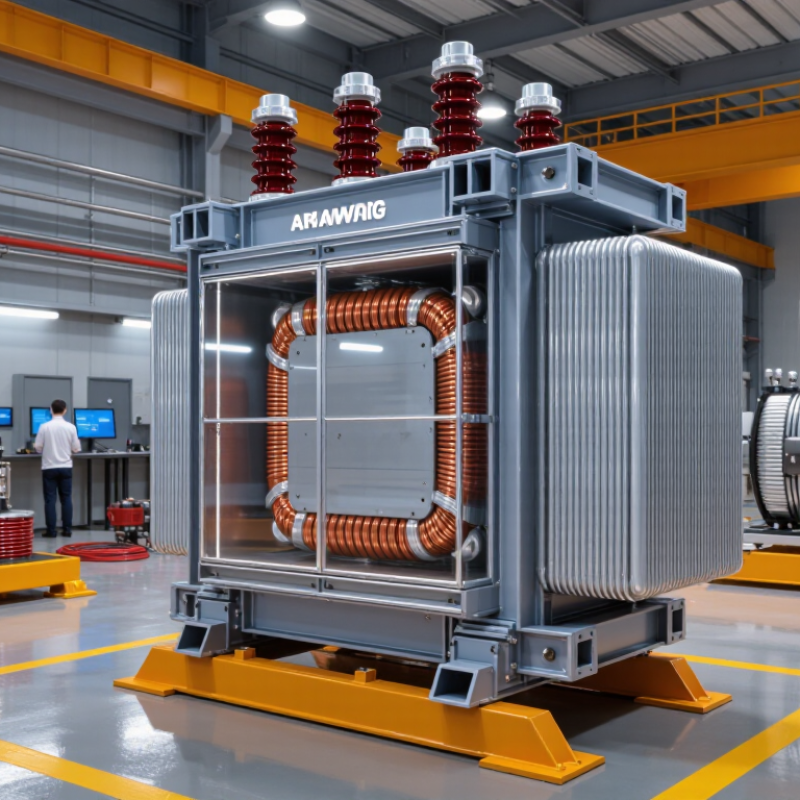
What Defines an Energy-Efficient Transformer?
An energy-efficient transformer is defined by more than a low purchase price. Its real performance depends on no-load loss, load loss, temperature rise, and service life. No-load loss continues whenever the transformer remains energized. Load loss increases as demand rises. A reliable design controls both.
In practical evaluations, engineers inspect the core steel, winding conductors, insulation, cooling path, and enclosure. High-quality core materials reduce magnetic loss. Carefully designed windings limit resistance and heat. Efficient cooling helps maintain stable temperatures during busy production hours. Small details matter, such as tight joints, clean terminals, and accurate temperature sensors. Poor installation can waste the benefits of excellent manufacturing.
Testing should follow recognized international or national standards. Buyers should request routine test reports, loss measurements, impedance data, and temperature-rise results. Factory quality records also reveal whether production remains consistent across different units. A transformer made in China can be highly efficient when its design matches the local voltage, load profile, climate, and maintenance capacity.
The cheapest option may not be the most economical. Energy prices, operating hours, repair access, and expected lifespan deserve careful calculation. A unit serving a hospital, factory, or data room may need different priorities. Even modern equipment has limits. Real operating conditions can differ from laboratory results, especially when loads change sharply or ventilation is restricted. Regular inspections remain necessary. Efficiency is measured in service, not only on paper.
How Chinese Transformer Efficiency Standards Are Measured
What Is the Best Energy Efficiency Transformer from China?
The best transformer is not chosen by price alone. Its efficiency must match China’s national measurement requirements. In practice, engineers check no-load loss, load loss, and total energy consumption. No-load loss continues when the transformer is energized. Load loss rises as the electrical demand increases. These values are tested under defined voltage, frequency, power, and temperature conditions.
Chinese efficiency standards, including GB 20052 and its current revision, classify transformers by energy efficiency grades. Testing laboratories compare measured losses with the limits for the transformer’s capacity and technical design. A reliable evaluation should include the test report, nameplate data, winding material, cooling method, and rated load. Temperature correction matters. A small testing difference can change the final result. This is where many simple comparisons become unreliable.
Tips: Ask for a complete factory test report and verify the test conditions. Compare losses at the same capacity and voltage. Check both no-load and load performance. A lower purchase price may hide higher operating costs. I have seen specifications look excellent until the actual load profile was reviewed. That is a useful reminder: laboratory efficiency is not always field efficiency. Procurement teams should also request independent verification when project risks are high.
What Is the Best Energy Efficiency Transformer from China? — How Chinese Transformer Efficiency Standards Are Measured
| Evaluation Dimension |
What Is Measured |
Chinese Standard or Method |
How to Identify a High-Efficiency Transformer |
| Energy-efficiency classification |
The combined no-load and load-loss performance of the transformer at its rated operating conditions. |
GB 20052, which specifies minimum allowable energy-efficiency values and energy-efficiency grades for power transformers. |
A transformer meeting Grade 1 has lower permissible losses than a Grade 2 or Grade 3 unit for the same applicable rating category. |
| No-load loss, P0 |
Core loss caused by the excitation voltage while the secondary winding is unloaded. |
Measured using a no-load test at rated frequency and rated voltage, with instruments suitable for low-power-factor measurements. |
Lower P0 is especially important for transformers that remain energized for long periods at low or zero load. |
| Load loss, Pk |
Winding I2R loss and additional stray loss produced by the load current. |
Measured by short-circuit testing and corrected to the specified reference temperature, commonly 75 °C for liquid-immersed distribution transformers. |
Lower Pk reduces operating losses when the transformer carries a substantial and continuous load. |
| Rated capacity |
The apparent-power rating in kVA or MVA used to compare loss limits. |
GB 20052 applies rating-specific limits; loss values must not be compared across different capacities without checking the relevant table. |
Compare transformers with the same capacity, voltage class, winding arrangement, cooling method, and frequency. |
| Efficiency calculation |
The ratio of useful output power to input power at a defined load and power factor. |
η = Pout ÷ (Pout + P0 + Pk,r × load factor2). |
The best choice is the unit with the lowest total loss at the site's actual load profile, not necessarily the lowest no-load loss alone. |
| Optimum-loss load point |
The load at which variable load loss equals fixed no-load loss. |
Approximate optimum load factor = √(P0 ÷ Pk,r). |
A transformer with balanced P0 and Pk can deliver better annual energy performance across changing loads. |
| Test voltage and frequency |
Whether the reported losses were obtained at the rated voltage and rated frequency. |
Routine and type-test procedures are governed by the applicable transformer testing standards, including GB/T 1094 series and aligned IEC 60076 practices. |
Loss certificates should state test voltage, frequency, temperature, measurement uncertainty, and correction method. |
| Temperature correction |
Adjustment of measured winding resistance and load loss to the specified reference temperature. |
The correction is necessary because conductor resistance changes with temperature. |
Only compare load-loss figures stated at the same reference temperature. |
| Core material and construction |
The design features used to reduce hysteresis, eddy-current, and joint losses in the magnetic core. |
Core design supports compliance with the specified no-load-loss limit; the standard evaluates performance rather than prescribing a single material. |
Use certified loss data rather than selecting solely by core-material description. |
Worked Efficiency Example for a 1,000 kVA Distribution Transformer
| Parameter |
Value |
Calculation or Meaning |
| Rated apparent power |
1,000 kVA |
Reference rating for this calculation example. |
| No-load loss, P0 |
1.50 kW |
Fixed loss present whenever the transformer is energized. |
| Rated load loss, Pk,r |
10.30 kW |
Load loss at rated current and the stated reference temperature. |
| Approximate optimum load factor |
38.2% |
√(1.50 ÷ 10.30) × 100%; fixed and variable losses are approximately equal at this load. |
| Efficiency at 50% load, unity power factor |
99.19% |
500 ÷ [500 + 1.50 + (10.30 × 0.52)] × 100%. |
| Efficiency at 100% load, unity power factor |
98.83% |
1,000 ÷ [1,000 + 1.50 + 10.30] × 100%. |
Selection principle: The most energy-efficient transformer is the one with the lowest verified total loss for the required capacity, voltage class, operating temperature, and annual load profile, while complying with the applicable GB 20052 energy-efficiency grade and GB/T 1094 test requirements.
Key Technologies Used in High-Efficiency Chinese Transformers
What Is the Best Energy Efficiency Transformer from China?
The best energy-efficient transformer depends on its load profile, voltage level, and installation environment. High-efficiency Chinese transformers now combine refined materials, accurate manufacturing, and continuous performance testing. The core is crucial. Amorphous metal cores can reduce no-load losses, especially in distribution systems energized all day. Grain-oriented silicon steel remains practical for larger units and stable operating conditions.
Advanced winding designs also improve efficiency. Foil windings reduce resistance and help control local temperature rises. Carefully calculated magnetic flux limits vibration, noise, and unnecessary heating. Computer-based electromagnetic simulation supports this process, but factory measurements remain essential. Engineers should compare no-load loss, load loss, impedance, and temperature rise under recognized testing procedures.
Thermal management deserves close attention.
Oil channels, improved insulation, and optimized radiators help remove heat safely. Some modern units use intelligent sensors to monitor temperature, moisture, and partial discharge. Useful data.
From my experience reviewing transformer specifications, efficiency claims can look impressive without showing operating conditions. A lower loss figure may involve a higher purchase cost or different loading assumptions. Transport damage and installation quality can also weaken real performance. Buyers should request certified test reports, inspection records, and clear efficiency data at expected loads. The strongest choice is not always the newest design. It is the transformer whose measured performance matches the site’s daily demands.
How to Compare Leading Chinese Transformer Manufacturers
What Is the Best Energy Efficiency Transformer from China?
How to Compare Leading Chinese Transformer Manufacturers
The best transformer is not always the cheapest model. Compare no-load loss, load loss, efficiency grade, insulation life, and total ownership cost. According to the International Energy Agency’s Electricity Grids and Secure Energy Transitions report, global annual grid investment must rise from about 300 billion dollars to over 600 billion dollars by 2030. Efficient transformers can reduce losses across this expanding network.
Ask each Chinese manufacturer for certified test data, not marketing claims. Check compliance with IEC 60076 and applicable Chinese standards, including GB 20052. Review factory testing records, temperature-rise results, partial-discharge levels, and short-circuit performance. Independent laboratory reports matter. So does traceability.
A practical comparison should include five years of operating losses. A transformer with a higher purchase price may recover the difference through lower electricity waste. However, projected savings can be overstated. Use your actual load profile, electricity tariff, ambient temperature, and maintenance schedule. I have seen comparisons fail because they used rated load continuously. That rarely reflects field conditions.
Tips: Request guaranteed no-load and load-loss values in the contract. Inspect the core joints and winding materials during a factory audit. Confirm spare-parts access and response times. Compare warranty coverage carefully. A reliable supplier should explain deviations, not hide them. Check whether efficiency data comes from routine tests or independent type tests.
Energy Efficiency Comparison for a 1,000 kVA Distribution Transformer
Efficiency changes with transformer loading: core loss remains nearly constant, while winding load loss increases approximately with the square of current. The chart uses a transparent engineering calculation based on 1.1 kW no-load loss and 10.5 kW load loss at rated current, with a power factor of 1.00. Use certified test reports and verified GB/IEC compliance when comparing Chinese manufacturers.
Calculation basis: Efficiency = Output Power ÷ (Output Power + No-load Loss + Load Loss). Load loss is calculated as 10.5 × load factor² kW. The figures are calculated reference values, not company or brand claims.
Choosing the Best Transformer for Specific Applications
What Is the Best Energy Efficiency Transformer from China?
Choosing the best transformer depends on the application, not the country of origin. A factory running 24 hours needs low-load losses and stable cooling. A solar substation needs strong overload tolerance and reliable voltage control. For urban buildings, noise and fire safety may matter more than maximum capacity. The “best” model is rarely universal.
The U.S. Department of Energy reports that distribution transformers consume roughly 60–70 billion kWh annually in the United States. This makes no-load loss a serious operating cost. Amorphous-core designs can reduce no-load losses, especially where equipment remains energized continuously. However, their purchase price, mechanical strength, and supplier experience require careful review. Small details matter. Measure them.
For a Chinese transformer, request certified test results under IEC 60076 or the project’s required national standard. Compare no-load loss, load loss, impedance, temperature rise, partial discharge, and sound level. The European Commission’s Ecodesign assessment projected transformer efficiency measures could save about 16 TWh of electricity annually by 2030. That figure shows why lifecycle cost deserves more attention than the initial quotation. Ask for production records, routine-test reports, material traceability, and independent inspection. A lower-loss design may still fail if ventilation is poor or the load profile was guessed incorrectly. Engineers sometimes over-specify capacity, which increases capital cost without improving real efficiency.