How to Choose the Right Electrical Transformer for Your Needs?
Choosing the right electrical transformer is crucial for various applications. The global transformer market is projected to grow significantly, reaching approximately $22 billion by 2026, according to recent reports. This growth reflects the increasing need for efficient energy distribution in both residential and industrial sectors.
Selecting an electrical transformer involves assessing factors such as voltage requirements, power ratings, and environmental conditions. For instance, transformers for renewable energy sources have unique specifications. Ignoring these details can lead to inefficiency or equipment damage. Many buyers overlook the importance of proper sizing, which can result in inflated operational costs.
Furthermore, understanding the specific application can be complex. Each industry has distinct requirements. For example, power plants may need robust transformers that withstand harsh conditions. In contrast, smaller facilities might benefit from compact designs. Reflecting on these variables helps in making an informed decision. Ultimately, selecting the right electrical transformer is essential for optimizing performance and energy efficiency.

Understanding the Basics of Electrical Transformers
When selecting an electrical transformer, understanding the basics is crucial. Transformers are essential devices that transfer electrical energy between circuits. They come in various types, such as step-up and step-down transformers. Each type serves a specific purpose. It's vital to recognize your power requirements. Mismatching can lead to equipment damage or inefficiency.
Additionally, the size of the transformer matters. A transformer that is too small may overheat and fail. On the other hand, a large transformer can be expensive and waste energy. You must evaluate your electrical load carefully. Take note of the voltage and current ratings required for your application. This process requires attention and may lead to errors if not done correctly.
Don't forget about installation and maintenance aspects. A poorly installed transformer can result in operational inefficiencies. Regular checks are necessary to ensure longevity. Remember, choosing the right transformer is a task that demands both knowledge and patience. Balancing these factors often proves challenging, but with proper understanding, you can make a more informed decision.
Identifying Your Power Needs and Specifications
When selecting the right electrical transformer, understanding your power needs is crucial. Start by calculating your total power requirements. List all devices and appliances you plan to connect. Each has a specific wattage that adds up. It’s easy to overlook small items, but they can contribute significantly to your overall demand.
Next, consider the voltage specifications. Different devices operate at various voltage levels. Ensure the transformer you choose matches these specifications. Mismatched voltages can lead to device failure. It's a mistake to assume all devices consume power similarly. For instance, industrial machinery often requires more stable voltage than smaller household items.
Finally, think about the environmental conditions where the transformer will be installed. Temperature fluctuations can affect performance. A transformer in a hot, humid area might not last as long. Make sure to review the transformer’s ratings for durability and compliance.
These factors might seem tedious, but they are vital for effective long-term use. An oversight here can lead to costly repairs later.
Evaluating Transformer Types and Their Applications
Choosing the right electrical transformer requires a thorough evaluation of transformer types and their applications. Generally, transformers are categorized into two main types: step-up and step-down. Step-up transformers increase voltage, while step-down transformers decrease it. This distinction is crucial in selecting a transformer based on your specific power requirements.
Consider the power rating that you need. For instance, a report by the International Electrotechnical Commission (IEC) indicates that transformer ratings can range from a few kVA to over 100 MVA. Your application will dictate the power handling capacity you require. Industrial settings often need larger transformers, while residential applications may be suited for smaller units.
Tips: Evaluate your load requirements before making a choice. Are you upgrading existing systems or starting new installations? This reflection can significantly influence your decision.
Material choice is also vital. Copper and aluminum are common conductor materials. Copper has better conductivity but is costlier. Conversely, aluminum is lighter but has a higher resistivity. A study by the IEEE shows that the average lifespan of a transformer can be around 20-25 years, making the right choice crucial for long-term efficiency and reliability. Always think about future needs as well as current ones.
How to Choose the Right Electrical Transformer for Your Needs? - Evaluating Transformer Types and Their Applications
| Transformer Type |
Primary Application |
Power Rating (kVA) |
Voltage Levels (V) |
Cooling Method |
| Step-Down Transformer |
Residential Power Supply |
50 - 200 |
120/240 |
Air-Cooled |
| Step-Up Transformer |
Industrial Applications |
100 - 5000 |
480/600 |
Oil-Cooled |
| Isolation Transformer |
Safety and Electrical Isolation |
1 - 500 |
120/480 |
Natural Air-Cooled |
| Autotransformer |
Voltage Regulation |
1 - 1000 |
220/110 |
Self-Cooled |
| Three-Phase Transformer |
High Power Industrial Usage |
500 - 10000 |
400/230 |
Oil-Cooled |
Considering Voltage Ratings and Phase Configuration
When selecting an electrical transformer, understanding voltage ratings is crucial. Voltage ratings indicate the primary and secondary voltage levels. Choose a transformer that matches your system's voltage requirements. Insufficient voltage can lead to inefficiency. Over-voltage can cause damage. Pay close attention to these specifications.
Phase configuration also plays a vital role. Single-phase transformers are suitable for residential applications. They are simpler and usually less expensive. However, for industrial settings, three-phase transformers are often preferred. They provide better efficiency and higher power capacity. Consider the load requirements before choosing the phase configuration.
Not everyone considers future needs. A transformer that fits now may not suffice later. If expansion is a possibility, opt for a transformer with a higher capacity. This foresight can prevent costly upgrades down the road. Each choice has implications, and reflecting on these can lead to better long-term results.
Voltage Ratings of Common Electrical Transformers
This chart illustrates the availability of various electrical transformers based on their voltage ratings. The data indicates that transformers rated at 600V are the most prevalent, while higher voltage ratings progressively have fewer options available.
Assessing Efficiency and Regulatory Compliance Standards
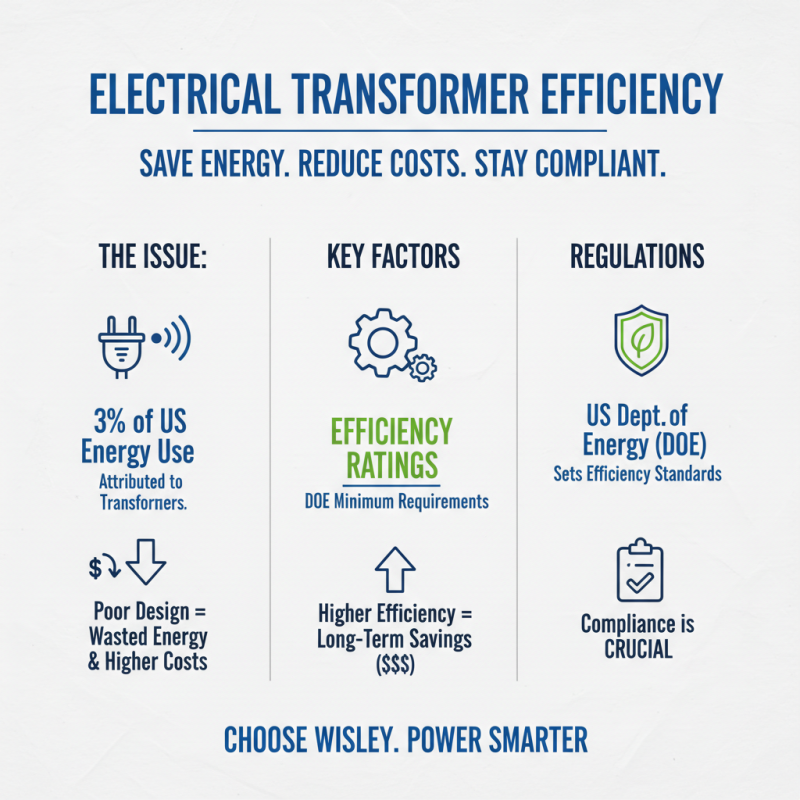
When selecting an electrical transformer, efficiency and compliance with regulatory standards are crucial. The U.S. Department of Energy (DOE) claims that transformers account for about 3% of national energy use. Poorly designed transformers can lead to wasted energy and higher costs. Efficiency ratings, such as the DOE's minimum requirements, can vary significantly. A higher efficiency transformer might have an upfront cost but can save energy over time.
Regulatory standards play a critical role. In the U.S., for example, there are stringent guidelines to ensure safety and environmental protection. Non-compliance may not just lead to fines; it can result in operational inefficiencies. Some organizations overlook the details, assuming lower-cost options are sufficient. Such perspectives ignore potential failures and increased long-term expenses.
It is essential to evaluate both new and existing systems. Energy savings can be realized by retrofitting older transformers. A report from the IEEE highlights that upgrading an old transformer can boost efficiency by up to 30%. However, this requires an analysis of the specific operational context. It's important to make informed decisions rather than choosing based solely on initial costs.