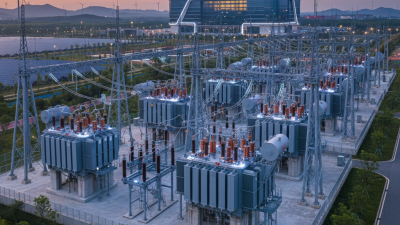
Choosing the right home electrical transformer is no longer a simple matter of matching voltage ratings. Global electricity demand is expanding, while households increasingly use heat pumps, solar inverters, electric vehicles, and sensitive digital equipment. The International Energy Agency’s Electricity 2024 report projects global electricity demand to grow by about 4% annually through 2026. This growth places greater pressure on dependable residential power conversion and distribution equipment.
A suitable transformer must match local voltage, frequency, load profile, installation space, climate, and safety requirements. The U.S. Department of Energy’s 2024 energy-conservation rule for distribution transformers also highlights the industry’s shift toward lower losses and improved efficiency. Small gains matter. A transformer operating continuously beside a home service panel can waste energy through heat, even when household demand appears modest. Noise, ventilation, fire protection, and maintenance access deserve equal attention.
This guide reviews the top 10 home electrical transformer types for global buyers, including step-down, step-up, isolation, toroidal, and smart transformer designs. Each type serves a different practical situation. Some support imported appliances. Others stabilize sensitive electronics or integrate with renewable-energy systems. There is no perfect ranking. A compact transformer may save space but provide limited capacity. A highly efficient model may cost more initially. IEC 60076 standards offer an important technical reference, but local certification still determines market suitability. Buyers should verify nameplate data, tested efficiency, enclosure protection, and installer qualifications before purchase. One detail is easy to overlook: real homes rarely maintain a perfectly balanced load. That imperfection should shape the final selection.
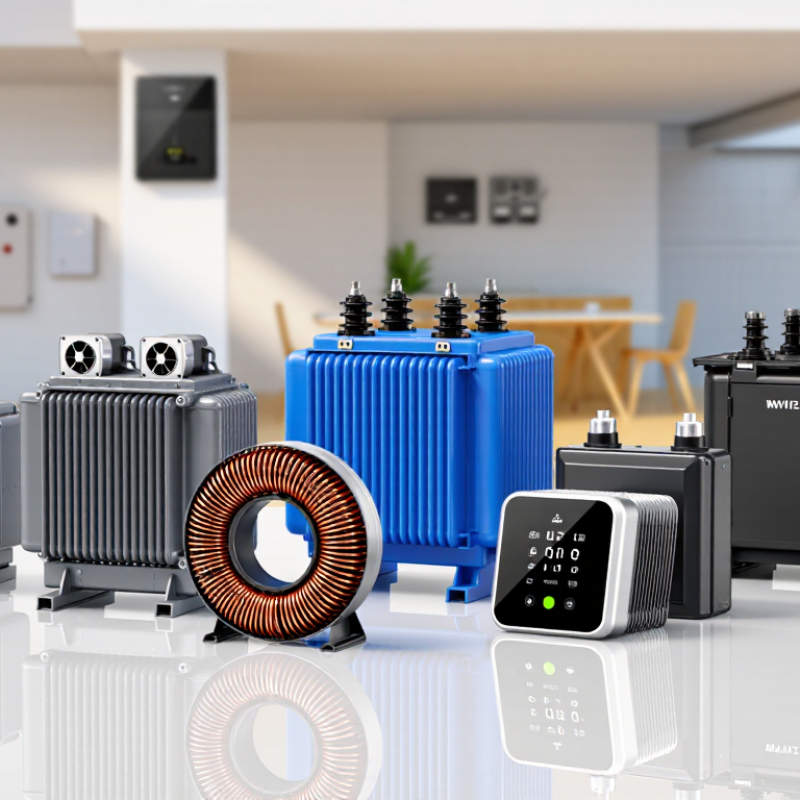
Residential transformers quietly control how electricity enters a home. They reduce utility voltage to safer service levels, commonly 120/240 volts in North America. In other regions, household systems may use 230 volts. The correct choice depends on voltage, frequency, load, installation space, and local standards. Common options include dry-type, oil-immersed, isolation, autotransformer, step-up, step-down, toroidal, split-phase, three-phase, and smart transformers.
Small details matter. A step-down transformer may serve lighting or control circuits, while an isolation transformer can reduce electrical noise between circuits. Dry-type units suit indoor installations because they avoid liquid leakage risks. Outdoor units may require weatherproof enclosures and suitable cooling clearance. IEC 60076 provides widely used transformer testing and performance guidance. Buyers should also verify insulation class, impedance, temperature rise, short-circuit strength, and audible noise.
Demand is becoming less predictable. The International Energy Agency’s Electricity 2024 report projects global electricity demand growth of about 4% in 2024 and 2025. Heat pumps, rooftop solar, electric vehicles, and home batteries can change residential load patterns quickly. A transformer sized only for today may age badly. Yet oversizing also increases purchase cost and may reduce efficiency at light loads. The U.S. Department of Energy’s distribution-transformer analysis emphasizes that lifetime energy losses deserve attention, not only the purchase price. A neat specification sheet can still hide a poor field choice. Check actual peak loads, future circuits, ventilation, and maintenance access before approval.
| No. | Transformer Type | Primary Residential Use | Typical Phase | Common Voltage Range | Typical Rating Range | Cooling / Insulation | Typical Installation | Main Advantages | Important Buying Considerations |
|---|---|---|---|---|---|---|---|---|---|
| 1 | Single-Phase Distribution Transformer | Reduces utility medium voltage to low-voltage electricity for individual homes, small buildings, or rural services. | Single-phase | Primary commonly 2.4–34.5 kV; secondary commonly 120/240 V or 220/230/240 V, depending on the country. | Approximately 5–167 kVA for many residential service applications. | Usually oil-immersed and naturally cooled; dry-type versions are also available. | Utility pole, ground-level enclosure, or compact substation. | Well suited to dispersed residential loads and relatively simple service connections. | Verify utility specifications, primary voltage, secondary voltage, frequency, impedance, tap range, and local safety requirements. |
| 2 | Three-Phase Distribution Transformer | Supplies larger homes, apartment buildings, housing developments, and residences with three-phase equipment. | Three-phase | Primary commonly 6.6–35 kV; secondary commonly 208Y/120 V, 400Y/230 V, or other regional systems. | Approximately 15–2,500 kVA, with smaller ratings used for residential developments. | Oil-immersed or dry-type; cooling may be natural air or natural oil circulation. | Pad-mounted, indoor electrical room, or compact substation. | Efficient for balanced loads, elevators, heat pumps, workshops, and multi-unit buildings. | Confirm phase sequence, vector group, neutral arrangement, fault level, load balance, and available installation space. |
| 3 | Pole-Mounted Transformer | Provides overhead utility service to detached houses and rural or low-density residential areas. | Usually single-phase; three-phase configurations are also used. | Primary commonly 2.4–34.5 kV; secondary commonly 120/240 V or 230/400 V systems. | Commonly 5–167 kVA for single-phase residential service. | Typically oil-immersed with sealed or conservator-type construction. | Mounted on a utility pole or overhead structure. | Cost-effective for overhead networks and relatively easy for utilities to access. | Requires suitable pole loading, clearances, grounding, lightning protection, wildlife protection, and local utility approval. |
| 4 | Pad-Mounted Transformer | Serves underground residential distribution networks, subdivisions, apartment complexes, and commercial-residential sites. | Single-phase or three-phase | Primary commonly 2.4–35 kV; secondary commonly 120/240 V, 208Y/120 V, or 400Y/230 V. | Approximately 25–2,500 kVA, depending on phase and network requirements. | Often liquid-filled and naturally cooled; dry-type outdoor units are available for selected applications. | Ground-level, lockable enclosure installed on a concrete pad. | Improves streetscape appearance and works well with underground cables. | Check enclosure security, flood elevation, ventilation, cable bend radius, working clearances, and public-access protection. |
| 5 | Indoor Dry-Type Transformer | Steps voltage down inside homes with large electrical systems, apartment buildings, data rooms, and residential service facilities. | Single-phase or three-phase | Common secondary outputs include 120/208 V, 277/480 V, and 230/400 V; primary voltage varies by installation. | Approximately 1–1,000 kVA for many low-voltage building applications. | Air-cooled; windings are commonly resin-encapsulated or otherwise solid-insulated. | Indoor electrical room, utility room, or protected outdoor cabinet. | No insulating oil, reduced leakage risk, and generally suitable for indoor locations. | Allow for heat dissipation, audible noise, ventilation, fire clearances, inrush current, and adequate floor loading. |
| 6 | Oil-Immersed Distribution Transformer | Used for utility service, site distribution, and larger residential developments where high efficiency and outdoor operation are important. | Single-phase or three-phase | Primary commonly 2.4–35 kV; secondary voltage is selected for the local low-voltage network. | Approximately 5–2,500 kVA in residential and small-building distribution applications. | Mineral oil or approved alternative insulating liquid; commonly ONAN natural cooling. | Outdoor pole-mounted, pad-mounted, or substation installation. | Good thermal performance, high efficiency, and long service life when properly maintained. | Consider liquid containment, fire risk, environmental rules, maintenance access, temperature rise, and oil inspection requirements. |
| 7 | Isolation Transformer | Provides galvanic separation between the source and selected loads such as medical areas, sensitive electronics, workshops, or audio systems. | Single-phase or three-phase | Common examples include 120:120 V, 230:230 V, and 400:400 V; other ratios are available. | Approximately 0.5–100 kVA for residential and light-building applications. | Dry-type, air-cooled construction is common. | Indoor electrical panel, equipment room, or dedicated enclosure. | Reduces direct conductive coupling and can help manage certain noise and grounding problems. | It does not automatically regulate voltage or eliminate all surges; specify shield requirements, grounding method, leakage current, and short-circuit protection. |
| 8 | Autotransformer | Provides a modest voltage increase or decrease where electrical isolation is not required, such as adapting equipment to a nearby voltage. | Single-phase or three-phase | Common applications include 208↔240 V, 220↔230 V, and 380↔400 V adjustments. | Approximately 0.5–500 kVA, depending on voltage ratio and duty. | Dry-type or oil-immersed; natural cooling is common. | Indoor panel, equipment cabinet, or outdoor distribution installation. | Smaller, lighter, and often more efficient than an equivalent two-winding transformer for small voltage differences. | There is no galvanic isolation between input and output; confirm grounding, touch-voltage protection, fault current, and code compliance. |
| 9 | Toroidal Transformer | Used in compact residential equipment such as audio systems, control panels, lighting equipment, and low-power automation devices. | Usually single-phase | Common primary inputs include 115 V, 120 V, 220–240 V, or dual-voltage versions; secondary voltages are application-specific. | Approximately 50 VA–10 kVA for common equipment applications. | Dry-type with a ring-shaped magnetic core; natural air cooling is typical. | Inside equipment, cabinets, or compact indoor enclosures. | Low external magnetic radiation, compact shape, and good efficiency at suitable loads. | Specify mounting method, inrush current, thermal protection, regulation, insulation class, creepage distance, and operating frequency. |
| 10 | Buck-Boost Transformer | Corrects relatively small supply-voltage deviations for appliances, pumps, HVAC equipment, lighting, and workshop loads. | Single-phase or three-phase | Typical correction ranges include approximately ±5%, ±10%, or ±20% of the nominal system voltage. | Approximately 0.05–25 kVA for many residential and light-commercial applications. | Usually dry-type and air-cooled. | Indoor electrical panel, equipment cabinet, or protected outdoor enclosure. | Can improve equipment compatibility without converting the entire electrical system to a different voltage. | It is not a substitute for a voltage regulator; select the correct connection diagram, input voltage, output voltage, load current, and continuous-duty rating. |
| Buyer note: Voltage systems, frequency, grounding methods, efficiency classes, enclosure ratings, and installation rules vary by country. Final selection should be verified against the local utility requirements and applicable electrical standards by a qualified electrical professional. | |||||||||