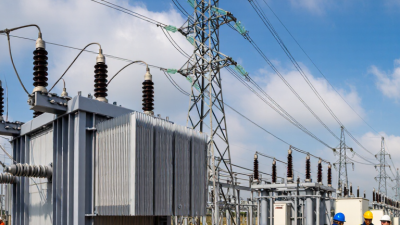
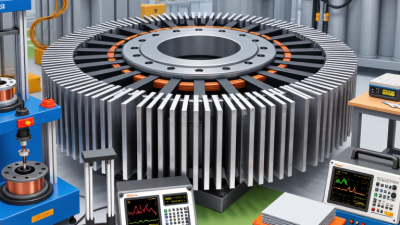
China’s transformer services market spans installation, testing, repair, refurbishment, and ongoing maintenance. The strongest providers do more than respond when equipment fails. They help owners assess risk, plan outages, and keep critical assets reliable. In this introduction to “What Are the Top Transformer Services in China?”, the focus is on how to compare providers, not on declaring a universal winner.
Transformer service specialist John J. Winders, author of Power Transformer Principles and Applications, offers a useful technical perspective. A careful paraphrase of his published guidance is: “Reliable transformer performance depends on understanding the equipment, its operating conditions, and its maintenance needs.” That distinction matters. A service team may need to inspect oil quality, check bushings, test insulation, or diagnose unusual temperature readings. The right scope depends on the transformer’s age, load, and service history.
Look for clear test procedures, qualified engineers, traceable reports, and practical after-service support. Ask how providers handle spare parts, site access, and emergency response. Details matter. A polished brochure cannot replace a well-documented inspection. Nor does a low price prove poor quality; it simply deserves careful comparison. China’s regions and project needs vary, so any shortlist should be checked against the actual site, equipment, and operating requirements. Some uncertainty remains: service quality is difficult to judge from marketing claims alone. That is worth remembering.
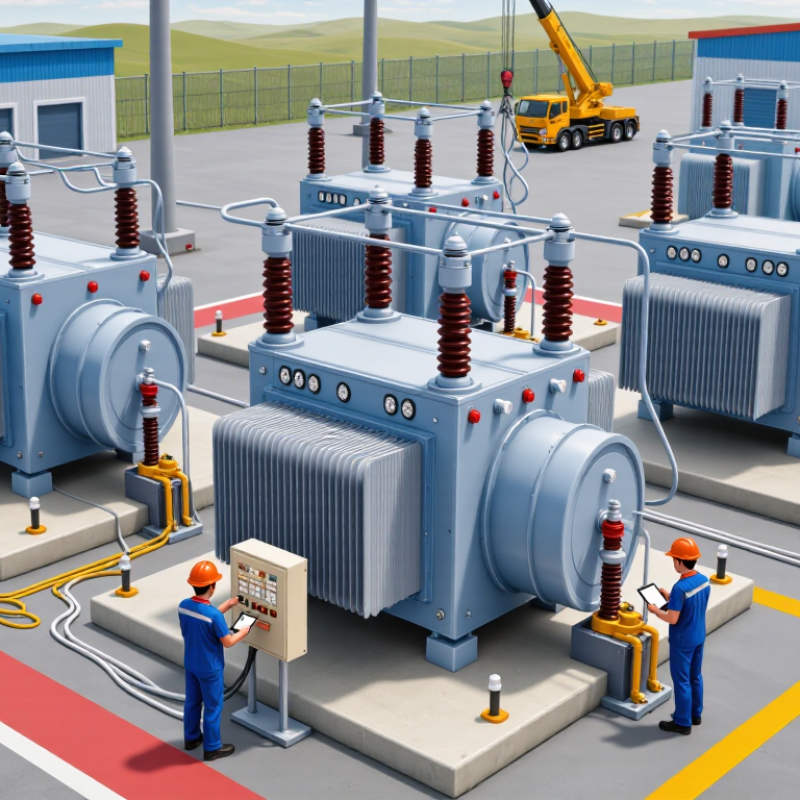
China’s 3.35-TW power system places transformers at the center of a vast, diverse electricity network. They connect generation, transmission, and local distribution, often operating under heavy loads and changing weather. A fault can disrupt more than one site. Small details matter.
Transformer services therefore extend beyond emergency repair. Field teams inspect bushings, cooling fans, seals, and connections, while oil and insulation tests can reveal early signs of deterioration. Diagnostic checks help operators decide whether a unit needs maintenance, refurbishment, or replacement. In substations, technicians may also test protection systems and verify that equipment performs as intended. These checks are most useful when records are consistent and measurements are compared over time.
Demand varies by location and asset age. Urban networks may need rapid fault response and careful load management; remote sites can face longer access delays. Monitoring tools can flag temperature or gas changes, but they cannot replace skilled inspection. Data can be incomplete. Service planning should account for spare parts, outage windows, and the consequences of postponing work. Even a tidy maintenance schedule can miss a problem if field observations are not recorded clearly.

Transformer services across 10–1,000 kV networks begin with matching equipment to real operating conditions. Engineers assess load profiles, fault levels, voltage regulation, cooling needs, and the consequences of an outage. At distribution voltages, compact layouts and feeder coordination matter. At transmission and ultra-high-voltage levels, insulation coordination, clearances, transport routes, and system stability demand closer attention. Small assumptions can become expensive.
Design reviews should connect drawings with site constraints, including foundation capacity, cable entries, earthing, and lifting access. Installation teams then check alignment, connections, oil handling, and protection wiring against approved procedures. Clean work matters. Commissioning typically verifies winding resistance, turns ratio, insulation condition, protective relays, alarms, and control interlocks before energization. Test limits depend on equipment design and applicable standards, so results need qualified interpretation rather than a simple pass-or-fail label. A detail that is easy to miss is the handover record: incomplete settings or unclear test notes can slow later maintenance. Even a careful plan may need adjustment when site conditions differ from the drawings.
In China, transformer condition monitoring is strongest when dissolved gas analysis (DGA) is read as a trend, not a one-time verdict. Hydrogen, methane, and acetylene levels can point to different fault processes, but sampling quality and operating conditions matter. Trends matter more. A rising gas level deserves attention, especially when it changes alongside load or temperature. IEC 60076 provides a framework for transformer ratings, performance, and testing; service teams should also follow applicable local requirements and equipment-specific guidance.
Insulation checks add another view. Insulation resistance and polarization index tests can reveal contamination or moisture concerns, while power factor and capacitance measurements help assess insulation condition. These tests often require an outage and careful preparation. Numbers can mislead. Compare results with earlier readings and, where available, factory baselines. Field records are not always tidy; missing load or temperature data can make comparisons less reliable. In humid coastal areas, moisture control and clean sampling equipment deserve particular care. No single test tells the whole story. A practical service report links test results, operating history, and observed changes, while clearly noting uncertainty.
China’s most valuable transformer services often begin with careful diagnostics, not a rushed rewind. Under GB/T 1094, repair teams can assess temperature rise, insulation condition, and short-circuit withstand capability against relevant technical requirements. These checks help identify whether a unit needs new insulation, winding work, or only improved cooling and connections. Small details matter: a hot terminal or damp gasket can undermine an otherwise sound repair.
Efficiency work needs a separate benchmark. GB/T 1094 sets key design and test requirements, while GB 20052-2020 specifies energy-efficiency limits and grades for power transformers. After repairs or upgrades, operators should verify losses through appropriate testing rather than assume better performance. The International Energy Agency’s 2023 report, Electricity Grids and Secure Energy Transitions, says annual grid investment needs to exceed USD 600 billion by 2030. That scale makes dependable transformer maintenance more than a workshop concern. But the number is not a repair target. Each unit’s loading, age, and test history still matter.
A practical service record should include oil or insulation test results, winding resistance, temperature observations, and post-repair loss measurements. Keep the readings. Compare them over time. Some field conditions resist neat conclusions; maintenance records can be incomplete, and one test cannot reveal every weakness. That is worth admitting.
| Service Area | Typical Scope | Relevant Standard or Reference | Practical Checks and Deliverables | Expected Outcome |
|---|---|---|---|---|
| Condition assessment and fault diagnosis | Review operating history, inspect the transformer, assess electrical test results, and investigate alarms, overheating, abnormal noise, or protection events. | GB/T 1094.1-2013, Power transformers — Part 1: General, as applicable to the transformer and project. | Documented inspection findings, test records, fault hypotheses, and a recommended repair or monitoring plan. | Better-informed repair decisions and a recorded baseline for future condition monitoring. |
| Oil inspection and treatment | For liquid-immersed units, inspect oil condition and, where appropriate, filter, dehydrate, degas, or replace the insulating liquid. | Use applicable insulating-liquid test methods and project requirements. GB/T 1094.1 provides general transformer requirements; it is not, by itself, a complete oil-maintenance procedure. | Oil test reports, treatment records, leakage checks, and confirmation that the selected liquid meets the applicable specification. | Improved control of moisture and contaminants when oil condition is confirmed as a maintenance issue. |
| Winding, core, and connection repair | Repair or replace damaged windings, connections, insulation, core components, or clamping structures following inspection and an approved repair plan. | GB/T 1094.1-2013 for general requirements; GB/T 1094.3-2017 for insulation levels and dielectric tests; GB/T 1094.5-2008 for short-circuit withstand capability, where applicable. | Repair records, winding and connection checks, insulation assessment, and specified post-repair electrical tests. | Restored condition and evidence that the repaired unit meets its agreed technical and test requirements. |
| Factory testing after repair | Perform tests selected for the transformer type, repair scope, and contract, such as winding resistance, ratio, insulation-related tests, and temperature-rise or other specified tests. | Relevant parts of the GB/T 1094 series, including GB/T 1094.2-2013 for temperature rise of liquid-immersed transformers and GB/T 1094.3-2017 for dielectric tests. | Test schedule, calibrated-instrument records, measured results, acceptance criteria, and a final test report. | Documented verification of the repair scope; the test set should be agreed for each unit rather than assumed to be identical. |
| Loss and efficiency assessment | Measure or verify no-load loss and load loss, review loading and operating conditions, and compare the transformer’s efficiency classification with applicable requirements. | GB 20052-2020, Minimum allowable values of energy efficiency and energy efficiency grades for power transformers. This is a separate efficiency standard, not a part of GB/T 1094. | Recorded loss values, transformer rating and test conditions, and a comparison against the applicable grade and procurement requirements. | A clear basis for deciding whether replacement, repair, or an efficiency-focused retrofit is appropriate. |
| Efficiency-focused retrofit | Assess design options such as lower-loss core materials, improved winding conductors, or design changes that reduce losses, subject to engineering validation. | GB 20052-2020 for applicable energy-efficiency requirements; relevant GB/T 1094 parts for transformer design and verification. | Before-and-after loss figures measured under comparable conditions, design calculations, and confirmation that ratings and other required performance are maintained. | Potential reduction in operating losses; savings should be calculated from measured data and the actual load profile, not assumed in advance. |
| Cooling and temperature-rise improvement | Inspect radiators, fans, pumps, controls, and airflow or oil-flow paths; repair or upgrade components where operating evidence supports it. | GB/T 1094.2-2013, Power transformers — Part 2: Temperature rise for liquid-immersed transformers, where applicable. | Cooling-system function checks, temperature records, and temperature-rise test evidence when specified by the repair or retrofit plan. | Improved thermal management when the existing cooling system is impaired or insufficient for the intended operating conditions. |
| Dry-type transformer repair | Inspect and repair windings, insulation, supports, terminals, and cooling arrangements on dry-type transformers. | GB/T 1094.11-2022, Power transformers — Part 11: Dry-type transformers, where applicable. | Inspection and repair records, electrical test results, and checks against the unit’s specified ratings and operating requirements. | Restored serviceability with verification appropriate to the dry-type design and repair scope. |
| Installation, commissioning, and handover | Check installation condition, connections, protection interfaces, cooling operation, and readiness for energization; provide operating and maintenance records. | Applicable GB/T 1094 parts, project specifications, and relevant installation, safety, and utility requirements. | Commissioning checklist, test reports, settings and interface records where relevant, and maintenance recommendations. | A traceable handover and a documented basis for safe operation and ongoing maintenance. |
Standards note: Applicable editions, test methods, and acceptance criteria should be confirmed against the transformer design, repair contract, and current project requirements. The GB/T 1094 series provides transformer technical requirements and test references; it does not constitute a single comprehensive repair-service specification.
Choosing transformer services in China requires evidence at the voltage class you operate. Ask for commissioning records, fault-diagnosis examples, and references for comparable substations—not just a broad equipment list. CIGRE’s international transformer reliability survey analyzed 964 major failures, illustrating why failure analysis and maintenance experience matter. IEA’s 2023 report, Electricity Grids and Secure Energy Transitions, says annual grid investment must rise from about $300 billion to over $600 billion by 2030. That expansion makes dependable field service more important, though it does not prove any single provider is ready.
Safety and response times deserve equal scrutiny. Check technician qualifications, documented isolation procedures, switching coordination, and the handling of oil sampling or lifting work. Ask providers to define response targets by region and fault severity. A promised hotline is not the same as a crew arriving at a remote site. Request anonymized work-order timestamps and escalation records. Paper credentials can still mislead; verify them against site references where possible.
Tips: Compare providers using one scorecard: voltage-class projects, safety records, spare-parts access, diagnostic tools, and response-time evidence. Include night and holiday coverage. Leave room for judgment: weather, access, and fault complexity can disrupt even a strong service plan.