Why Choose a Commercial EV Charger for Your Business?

Why Choose a Commercial Ev Charger for Your Business?

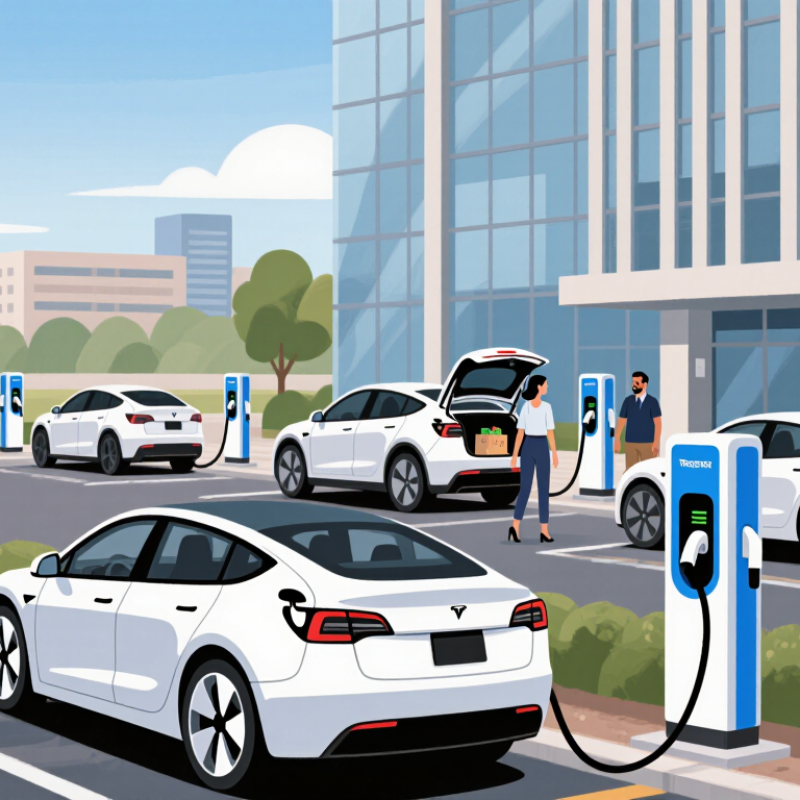
Installing a Commercial Ev Charger can turn an ordinary parking area into a useful customer service. Drivers may shop, work, or dine while their vehicles recharge. That extra dwell time can support longer visits and improve the overall site experience. Small details matter. Clear parking signs help. Reliable cables matter too.

A commercial system also offers stronger control than a basic home charger. Businesses can track energy use, manage access, and schedule charging during lower-demand periods. Load management may prevent several vehicles from overwhelming the building’s electrical capacity. A qualified electrician should review the site before installation. Utility requirements, panel capacity, parking layout, and future expansion all deserve attention.

The financial case is not automatic. Hardware, trenching, software, maintenance, and demand charges can change the payback period. That deserves honesty. A careful plan should compare expected charging use with operating costs. It should also consider employee charging, fleet needs, and public access. Certified equipment, documented testing, and responsive technical support strengthen reliability. Manufacturers’ specifications and local electrical standards should guide every decision.

This guide explores practical reasons businesses choose commercial charging. It also examines limitations that sales brochures may overlook. A charger that looks impressive can still perform poorly without suitable power planning. Real value comes from matching the equipment to daily traffic, business goals, and available infrastructure.
Why Choose a Commercial EV Charger for Your Business?

Market Need: Global EV Sales Surpassed 17 Million in 2024 (IEA)

Why Choose a Commercial EV Charger for Your Business?

Global electric vehicle sales surpassed 17 million in 2024, according to the International Energy Agency’s Global EV Outlook 2025. Electric cars represented more than one in five new vehicles sold worldwide. This growth is changing customer expectations. A delivery driver may need a reliable top-up before noon. An office visitor may prefer charging during a two-hour meeting. Commercial charging turns unused parking time into practical service capacity.

The IEA also reported that public charging points exceeded five million globally in 2024. Public chargers increased by about 30% during the year. However, access remains uneven across regions. A commercial charger can support workplaces, retail sites, hotels, and fleet depots where drivers already spend time. Features such as load management, usage monitoring, and scheduled charging can reduce pressure on a building’s electrical system.

Good planning matters more than installing the fastest unit available. A site assessment should review parking patterns, grid capacity, cable reach, accessibility, and local safety requirements. That sounds obvious.

In practice, businesses sometimes underestimate maintenance and peak-demand costs. We have seen charging projects perform poorly when utilization forecasts were too optimistic. A smaller installation with room to expand may be more reliable. Data from early operation should guide the next investment, not enthusiasm alone. The IEA’s market figures show strong demand, but every site still needs its own evidence.

Why Choose a Commercial EV Charger for Your Business? - Market Need: Global EV Sales Surpassed 17 Million in 2024 (IEA)
Key market indicators showing why workplaces, retail locations, hotels, fleet facilities and other commercial properties need reliable EV charging infrastructure.
Market Dimension Latest Verified Data Time Period What the Data Indicates Commercial Charging Relevance
Global electric car sales More than 17 million units 2024 Global electric car sales increased to more than 17 million, representing more than one in five new cars sold worldwide. A larger and rapidly expanding EV user base is creating sustained demand for charging at destinations beyond the home.
Global sales growth Approximately 20% year-on-year growth 2024 compared with 2023 Electric car sales continued to grow despite differences in market conditions across regions. Businesses can prepare for rising charging utilization instead of treating EV charging as a short-term niche service.
China electric car market More than 11 million electric cars sold 2024 China accounted for the largest share of global electric car sales, with electric cars representing a substantial portion of new-car sales. High-density commercial sites benefit from scalable chargers, load management and clear customer access policies.
European electric car market Approximately 3.2 million electric cars sold 2024 Europe remained one of the world’s largest electric car markets, with electric cars accounting for roughly one-fifth of new-car sales. Workplaces, retail centers, hotels and public parking facilities can use charging availability to support customer and employee mobility needs.
United States electric car market Approximately 1.6 million electric cars sold 2024 Electric car sales continued to expand, supported by growing model availability and wider consumer adoption. Commercial charging helps address the needs of drivers who lack convenient home charging or travel longer distances.
Electric-car sales outside the three largest markets Approximately 1.3 million units 2024 Sales growth increasingly extended beyond the largest established EV markets. Early deployment can help commercial properties serve emerging local demand and differentiate their customer experience.
Electric share of global new-car sales More than 20% 2024 Electric vehicles moved from an emerging technology toward a mainstream part of the global new-car market. EV charging can be planned as a core facility service, similar to parking, lighting and other customer amenities.
Charging location opportunity Destination and workplace charging remain important complements to home charging Current market need Not every driver has access to a private parking space or dedicated home charger, while many vehicles remain parked at commercial destinations for extended periods. Commercial chargers can improve convenience, support fleet operations, increase parking value and enable usage-based charging revenue.
Source: International Energy Agency, Global EV Outlook 2025 and related 2024 electric-car market data. Figures are rounded where indicated; “electric cars” refers to battery electric and plug-in hybrid electric cars unless otherwise specified.

Charger Types: Level 2 Delivers up to 19.2 kW; DC Fast Charging Goes Higher (DOE)

Why Choose a Commercial EV Charger for Your Business?

Choosing a commercial EV charger starts with charging speed and parking time. According to the U.S. Department of Energy, Level 2 chargers can deliver up to 19.2 kilowatts. They work well for offices, hotels, apartments, and retail locations where vehicles remain parked for several hours. Overnight parking helps. Drivers arrive, connect, and leave with a fuller battery during normal business activity.

DC fast charging delivers higher power than Level 2 equipment. It can support highway services, fleet operations, and locations with short customer visits. A vehicle may gain substantial range during a brief stop. However, actual performance depends on battery limits, temperature, charging state, and site capacity. More power is not always more useful. A busy afternoon can expose electrical bottlenecks, especially when several vehicles charge together. Utility demand charges may also change the operating cost.

A professional site assessment should review traffic patterns, parking duration, transformer capacity, cable placement, and future demand. Monitoring sessions can reveal whether drivers need speed or simply reliable access. Installation estimates can be optimistic. Real-world charging may slow during peak periods, and users may leave vehicles connected longer than expected. That is an imperfect detail, but it matters. A practical charger plan balances Level 2’s steady service with DC fast charging’s higher output, while leaving room for measured adjustments.

Operational Fit: Depot Charging Supports Predictable Fleet Dwell Times (NREL)

A commercial EV charger should fit your fleet’s daily rhythm, not simply add power to a parking area. NREL research highlights depot charging as a strong option when vehicles return for predictable dwell periods. A delivery van arriving at 6:00 p.m. can charge overnight before its next route. This reduces dependence on public charging and makes energy planning easier.

The numbers support this operational shift. The International Energy Agency reported more than 14 million electric cars sold globally in 2023, representing about 18% of new car sales. Fleet adoption is also growing, but charging demand varies by vehicle size, route length, and return time. The U.S. Department of Energy notes that Level 2 chargers typically add about 2 to 25 miles of range per hour. DC fast charging can add much more range in less time, but it may increase installation and electricity costs.

A depot system can use scheduled charging, load management, and vehicle priority rules. Picture ten vans connecting after one shift, while charging power rises gradually overnight. That is practical. However, schedules are rarely perfect. Late returns, winter temperatures, and unexpected routes can reduce the available dwell window. A thoughtful site assessment should examine actual mileage, parking duration, electrical capacity, and backup needs. NREL’s fleet studies support this measured approach: operational fit matters as much as charger speed.

Financial Planning: The U.S. 30C Credit Covers up to 30% of Costs (IRS)

A commercial EV charger can turn unused parking space into useful business infrastructure. It may support company vehicles, attract customers, and reduce charging delays. The financial planning deserves equal attention. Under current IRS guidance, the 30C credit can cover up to 30% of eligible charging property costs. Business owners should confirm whether the project meets prevailing wage and apprenticeship requirements. Without careful review, the credit percentage may be lower. The rules also require the charger to be placed in an eligible location, such as a qualifying low-income community or non-urban census tract. Keep invoices, installation contracts, site records, and payment evidence.

Tips: Ask a qualified tax professional to review eligibility before signing contracts. Separate charger equipment, electrical upgrades, permits, and labor on the budget. The credit has limits per charging item, so a large site may need extra planning. IRS rules can change. Check the latest guidance.

In practice, a detailed site survey prevents expensive surprises. A parking lot may need trenching, panel upgrades, or longer cable runs. These costs can affect the credit calculation. I have found that early electrical assessments make financial forecasts more realistic. Still, forecasts are not guarantees. Some businesses focus on the 30% figure and overlook utility charges, maintenance, and demand fees. A simple worksheet can compare the expected credit, installation cost, and yearly operating expenses. Confirm the installation date, property ownership, and tax treatment with qualified advisers. Good planning begins before equipment is ordered.

Scalable Deployment: Charging Demand Must Keep Pace with EV Growth (IEA)

Why Choose a Commercial EV Charger for Your Business?

Electric vehicle adoption is moving faster than many parking plans. The IEA’s Global EV Outlook 2024 reported nearly 14 million electric cars sold worldwide in 2023. Electric models represented about 18% of global car sales. More vehicles create longer queues, higher peak loads, and greater pressure on workplace and retail parking.

Scalable Deployment: Charging Demand Must Keep Pace with EV Growth (IEA)

The IEA estimates that public charging capacity for light-duty electric vehicles must grow almost ninefold by 2035 under stated policies. A commercial EV charger supports that expansion through modular hardware, load management, and software-based monitoring. Businesses can begin with several charging points, then add circuits and units as demand becomes visible. This approach reduces unnecessary construction today.

Small details matter. A charger near the main entrance improves visibility, while clear cable storage reduces trip risks and maintenance calls. In daily operations, tracking session times and electricity use reveals whether employees, visitors, or fleet vehicles create the highest demand. The U.S. Department of Energy also identifies charging speed, connector access, and site power as practical planning factors.

Overbuilding can waste capital. Underbuilding frustrates drivers. Forecasts are imperfect, and local demand may change after installation. A phased commercial system leaves room for correction, which is often more valuable than a perfect first estimate.