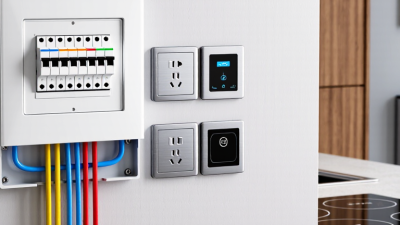
House electrical wiring is easy to ignore because it sits behind walls, ceilings, and floorboards. Yet every light, outlet, appliance, and charger depends on its condition. When wiring is damaged, overloaded, or poorly connected, heat can build inside familiar places, such as an outlet box or a crowded extension lead.
The risk is measurable. The National Fire Protection Association (NFPA) reported that electrical distribution and lighting equipment was involved in approximately 35,150 U.S. home structure fires each year from 2015 to 2019. These fires caused about 470 civilian deaths, 1,110 injuries, and $1.3 billion in direct property damage. Those figures describe the outcome, not every hidden warning. A warm wall plate may appear minor. It may not be.
Safe wiring supports more than convenience. It helps control current, protect circuits, reduce shock hazards, and allow safety devices to work correctly. The U.S. Consumer Product Safety Commission continues to warn consumers about electrical hazards involving damaged cords, overloaded outlets, and defective products. Professional electricians also rely on the National Electrical Code (NEC) when evaluating installation methods, grounding, circuit protection, and equipment placement. Local requirements can differ.
This article examines why house electrical wiring matters, from everyday reliability to fire prevention. It will consider aging insulation, loose connections, outdated panels, and modern demand from heat pumps, electric vehicles, and home offices. A circuit can work for years and still deserve inspection. That is the uncomfortable part. Experience helps identify patterns, but qualified assessment remains essential. Numbers guide attention. Careful testing confirms reality.
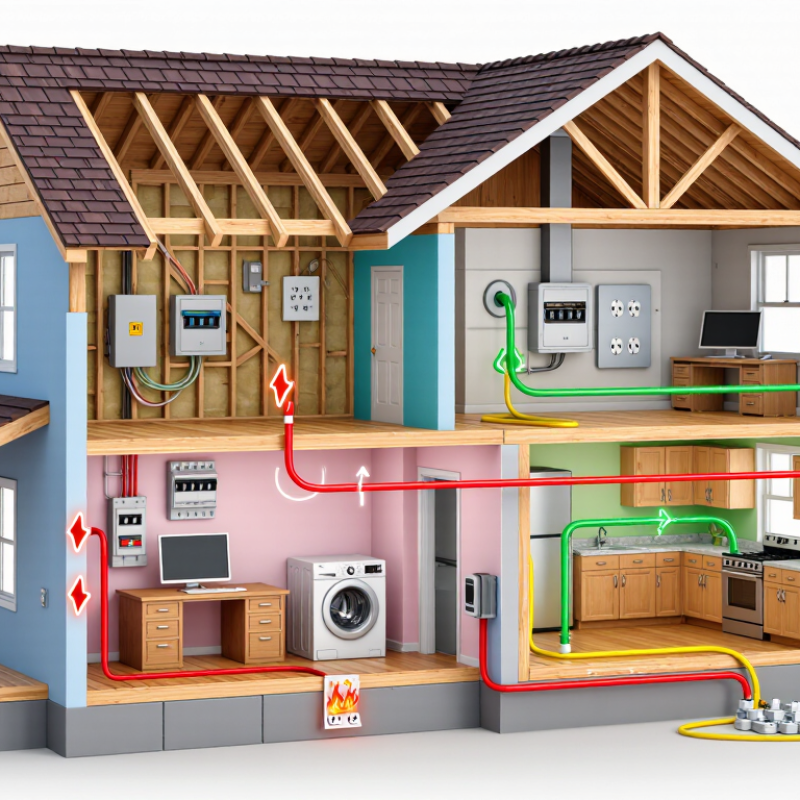
House electrical wiring is the connected system that moves electricity from the service panel to lights, outlets, and appliances. The panel divides incoming power into separate circuits. Each circuit uses insulated conductors to carry current through the walls. A switch interrupts the live conductor, allowing a lamp to turn on or off. Neutral wires complete the normal circuit, while grounding paths help direct fault current away from people.
Circuit breakers protect wiring from excessive current. If a damaged cable or overloaded outlet creates unusual heat, the breaker should disconnect that circuit. Correct wire size matters because thin conductors can overheat under heavy loads. Connections must also be tight and enclosed in approved boxes. Loose terminals may produce crackling sounds, warm outlet plates, or a faint burning smell. These signs should never be ignored. Local electrical requirements can differ, so a qualified electrician should inspect unfamiliar or altered wiring.
Tips: Keep high-load appliances on suitable circuits. Do not hide extension cords under rugs. Label the panel clearly. Test safety devices according to their instructions. A tidy installation can still contain a serious defect, so appearance is not proof of safety. Homeowners sometimes wait until a light flickers repeatedly. That delay is understandable, but it can allow a small wiring problem to become a larger one.

Why Is House Electrical Wiring Important?
How Electrical Wiring Powers Different Household Systems
House electrical wiring is the hidden network that powers daily household life. It carries electricity from the service panel to outlets, switches, lights, and appliances. Each circuit has a specific purpose and safe capacity. Kitchen outlets may support cooking equipment, while separate circuits serve heating or laundry systems. This arrangement helps prevent overheating and unnecessary power interruptions. Poor connections can create warm wall plates, flickering lights, or burning odors.
Wiring also supports household systems that people rarely notice. It powers water pumps, ventilation fans, security equipment, internet devices, and smoke alarms. In a bathroom, ground-fault protection can reduce shock risks near water. In a crowded kitchen, correctly rated circuits help several appliances operate safely. Small details matter here. A loose terminal can affect an entire room.
Professional electricians inspect wire condition, grounding, circuit protection, and panel connections. They also compare installations with current local electrical codes. During an inspection, testing equipment can reveal hidden voltage problems that normal use misses. I have found that labeling circuits clearly saves time during repairs and emergencies. Still, labeling alone cannot fix outdated wiring. A homeowner may assume one switch controls one circuit, but older homes can be less predictable. Any damaged insulation, repeated breaker trip, or unusual heat deserves prompt attention from a qualified professional.
Proper house wiring protects people before a problem becomes visible. Electricity travels through walls, ceilings, and floors, often unnoticed. A loose connection can create heat inside an outlet box. Damaged insulation can expose live conductors. These faults may cause shocks, fires, or sudden equipment failure.
Correct wiring includes suitable cable sizes, secure connections, grounding, and properly installed protective devices. Each circuit must carry its intended electrical load. Overloaded circuits can warm gradually, leaving brown marks around outlets or a faint smell of burnt plastic. An unexplained flicker deserves attention. So does a breaker that trips repeatedly.
A qualified electrician can test circuits, identify hidden damage, and compare the installation with current local electrical codes. Professional inspection matters during renovations, after water damage, or in older homes. I once assumed a quiet outlet was safe, but a loose terminal can remain silent for months. That assumption was careless. Homeowners should not remove covers or handle exposed wiring without proper training. Turn off the power, keep the area dry, and arrange an inspection when warning signs appear. Small details matter.
House wiring is the hidden framework behind every light, outlet, and appliance. Common wiring types include NM-B cable for protected indoor walls, and THHN or THWN conductors inside conduit. Copper offers excellent conductivity and easy termination. Aluminum can reduce weight and cost, but it needs careful connection design. Each material has limits.
A safe system also depends on components working together. The service panel distributes power through circuit breakers. Junction boxes protect splices. Grounding conductors provide a safer fault path. GFCI protection helps reduce shock risks in wet areas. AFCI protection can detect dangerous arcing. According to NFPA’s Home Structure Fires report for 2016–2020, electrical distribution and lighting equipment appeared in 12% of home structure fires. They were linked to 18% of civilian fire deaths. These figures make ordinary wiring choices less ordinary. A clean panel does not prove a safe installation. That assumption deserves more doubt.
Tips: Match wire size with breaker rating and circuit load. Keep connections inside approved boxes. Never hide loose splices behind drywall. Inspect warm outlets, flickering lights, and repeated breaker trips. A licensed electrician should test unfamiliar or altered wiring. Small warning signs matter. In practice, labeling every circuit saves time during repairs. I have found that unclear labels often create avoidable mistakes, even in otherwise careful installations. Reference: National Fire Protection Association, Home Structure Fires, 2016–2020.
| Category | Common Type or Component | Typical Material | Typical Residential Use | Key Characteristics | Safety or Installation Note |
|---|---|---|---|---|---|
| Wiring Method | Nonmetallic-Sheathed Cable (NM-B) | Copper or aluminum conductors with a plastic outer jacket | Dry, enclosed spaces such as walls, ceilings, and floors | Contains insulated circuit conductors and a grounding conductor in one cable assembly | Not intended for wet locations; cable size and installation must match the circuit requirements and local code |
| Wiring Method | Underground Feeder Cable (UF-B) | Moisture-resistant insulated conductors with a durable outer jacket | Outdoor circuits and underground runs supplying detached structures or equipment | Designed for direct burial where permitted by electrical regulations | Protect from physical damage and follow required burial depth, routing, and conduit rules |
| Wiring Method | Individual Conductors in Conduit | Copper or aluminum conductors inside metal or nonmetallic raceway | Exposed, unfinished, commercial-style, outdoor, or mechanically vulnerable areas | Allows conductors to be routed separately and replaced more easily | Conduit fill, conductor derating, bending radius, and grounding requirements must be observed |
| Conductor | Copper Wire | Annealed copper | Branch circuits, lighting, receptacles, feeders, and grounding connections | High conductivity, good flexibility, and reliable terminal connections | Terminals must be tightened according to the equipment manufacturer’s specifications |
| Conductor | Aluminum Wire | Aluminum alloy | Some larger feeders and service-entrance conductors | Lower weight and cost than copper for comparable ampacity, but larger conductor sizes are commonly required | Requires terminals and connection methods approved for aluminum conductors; professional inspection is recommended |
| Insulation | Thermoplastic Building Wire | Heat- and moisture-resistant thermoplastic insulation | Individual conductors installed in conduit or cable assemblies | Provides electrical separation and protection from moderate heat and moisture, depending on its rating | The insulation temperature and environmental rating must suit the installation location |
| Protection | Circuit Breaker | Molded insulating body with metal contacts and a thermal-magnetic or electronic trip mechanism | Main panels and branch circuits | Interrupts excessive current caused by overloads or short circuits | Breaker rating must be compatible with the conductor ampacity and connected equipment |
| Protection | Ground-Fault Circuit Interrupter (GFCI) | Electronic sensing circuit with switching contacts | Locations where electricity may contact water, such as kitchens, bathrooms, garages, basements, and outdoor areas | Detects an imbalance between current leaving and returning through the circuit and disconnects power quickly | Test buttons should be used regularly; required locations depend on the applicable electrical code |
| Protection | Arc-Fault Circuit Interrupter (AFCI) | Electronic arc-detection and circuit-interruption assembly | Many living areas and other locations specified by modern residential codes | Detects electrical arcing patterns that may cause fires | Compatibility with the wiring system and connected loads should be verified before installation |
| Distribution | Electrical Panelboard | Steel or insulating enclosure with busbars, breakers, and terminals | Receives incoming power and distributes it to branch circuits | Central point for circuit protection, isolation, and labeling | Must remain accessible, clearly labeled, dry, and free from blocked working space |
| Connection | Electrical Junction Box | Metal or flame-resistant plastic enclosure | Protects wire splices and provides mounting points for devices or light fixtures | Contains connections and helps prevent accidental contact with energized conductors | All splices must remain inside an accessible, properly covered box with adequate volume |
| Device | Receptacle Outlet | Insulating body with brass or plated metal contacts | Provides a connection point for portable appliances and equipment | May include grounding, tamper-resistant, weather-resistant, or GFCI features | Install the correct configuration and rating for the circuit and location |
| Device | Wall Switch | Insulating housing with metal terminals and switching contacts | Controls lighting, fans, and other fixed loads | Opens or closes the energized circuit to control a load | The switch rating should match the voltage, current, and type of load |
| Grounding | Equipment Grounding Conductor | Usually copper or aluminum conductor connected to grounding equipment | Provides a low-impedance path for fault current | Helps protective devices operate when a fault energizes exposed metal parts | Grounding and bonding connections must be continuous and installed according to code |
| Routing | Electrical Conduit | Metal, rigid plastic, or flexible nonmetallic material | Protects conductors from moisture, impact, abrasion, and sunlight where applicable | Creates a defined pathway for individual wires | Use fittings approved for the conduit type and maintain proper support and protection |
Note: Electrical wiring must be designed, installed, and inspected according to the applicable local electrical code and the requirements of the specific building.
House wiring begins with a planned circuit layout, not random cable placement. A qualified electrician checks the load, cable size, breaker rating, and grounding path. Wires should run through approved routes, away from sharp edges, heat, and moisture. Connections belong inside accessible junction boxes. Panels need clear labels. Small details matter.
During installation, power must remain off and verified with a reliable tester. A professional inspection examines insulation, terminal tightness, polarity, grounding, and protection devices. Ground-fault and arc-fault protection may be required in specific areas under local electrical codes. An inspector may also check cable support, outlet spacing, and signs of overcrowding inside the panel.
Maintenance starts with observation. Warm outlets, flickering lights, buzzing, burning smells, or repeated breaker trips deserve prompt attention. Do not remove a panel cover unless you are qualified to do so. An electrician can test circuits, tighten suitable connections, and replace damaged devices safely. Keep water away from electrical equipment, and never use extension cords as permanent wiring. Even careful work can age unevenly; a neat panel may hide a loose connection. Regular inspection is useful, but it is not perfect, especially after renovations, leaks, or pest damage. Keep inspection records, note unusual changes, and recheck areas that once caused concern.