2026 Best Industrial Transformer Suppliers Guide

Selecting an industrial transformer supplier affects grid stability, production continuity, maintenance costs, and worker safety. In 2026, buyers need more than attractive prices or polished product pages. They need evidence from factories, substations, engineering offices, and long-term service records.

This guide evaluates leading suppliers through practical, verifiable criteria. It considers transformer design, voltage ranges, insulation systems, efficiency data, testing procedures, delivery capability, and after-sales support. Factory certifications matter, but they do not tell the whole story. Site acceptance tests, oil analysis, noise measurements, and thermal performance reveal important details. Field experience counts.

A dependable supplier explains technical limits clearly. It provides drawings, test reports, warranty terms, spare-parts guidance, and emergency response contacts. It should also understand local climate, load patterns, installation conditions, and maintenance skills. A transformer designed for a dry indoor plant may fail expectations in a humid coastal substation.

The comparison is not absolute. Supplier rankings can change with project size, regional support, lead times, and compliance requirements. Some public claims remain difficult to verify. That deserves attention. Buyers should request independent references and inspect critical documents before signing contracts.

We also examine emerging expectations for 2026, including digital monitoring, lower-loss cores, recyclable materials, and smarter maintenance planning. These features can improve reliability, but they may increase complexity and training needs. Newer is not always better. The strongest choice balances proven performance, transparent engineering, responsive service, and realistic lifecycle costs. This guide aims to support careful decisions, not promote a single manufacturer.
2026 Best Industrial Transformer Suppliers Guide

Industrial Transformer Types and Their Core Applications in 2026

Industrial Transformer Types and Their Core Applications in 2026

Industrial transformer selection is becoming more demanding as factories, data centers, and renewable projects expand. The IEA’s Electricity 2024 report forecasts about 2,500 TWh of additional global electricity demand through 2026. That growth increases pressure on transformer capacity, efficiency, and delivery schedules.

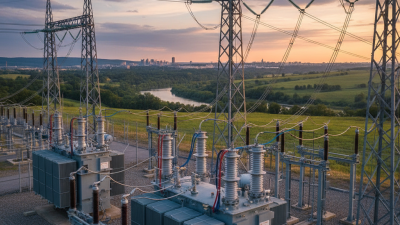
Oil-immersed transformers remain common in substations and heavy manufacturing. Their strong heat dissipation suits high loads and outdoor installations.

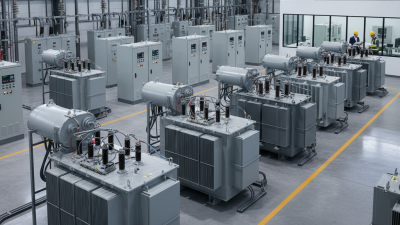
Dry-type transformers fit indoor plants, hospitals, and data centers. They reduce fire-related risks and simplify placement near sensitive equipment.

Isolation transformers support testing lines and medical systems, while autotransformers help manage voltage efficiently in motor-starting applications.

Arc furnaces and variable-speed drives often need special designs for harmonics and repeated load changes.

Details matter.

A transformer beside a dusty furnace may need sealed protection and stronger cooling. A data center requires low-noise operation, careful grounding, and stable voltage under rapid load changes.

The U.S. Department of Energy’s recent transformer supply-chain assessments report extended lead times for several transformer categories, making early technical review practical.

Yet a larger unit is not automatically better. Oversizing can increase no-load losses, while undersizing creates hot spots, noise, and shortened insulation life. Field teams still need to verify actual load profiles, ambient temperature, harmonics, and maintenance access. Specifications often look complete. They are not.

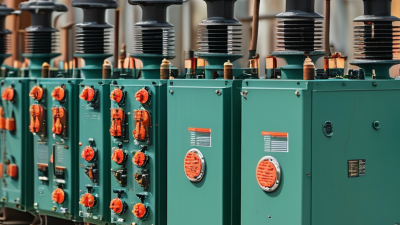
Key Criteria for Evaluating Industrial Transformer Suppliers

Choosing among the 2026 best industrial transformer suppliers requires more than comparing prices. Start with the supplier’s engineering experience and project history. Ask for evidence from installations with similar voltage, load profiles, cooling needs, and operating environments. A capable supplier should explain core losses, temperature rise, insulation systems, noise levels, and protection requirements in practical terms.

Technical documents matter. Review routine test reports, design calculations, material traceability, factory inspection procedures, and compliance with applicable international standards. Reliable suppliers communicate clearly about production schedules, spare parts, warranty limits, and service response times. Visit a manufacturing facility when possible. Clean assembly areas and consistent testing records can reveal more than polished sales presentations. Still, no evaluation is perfect. A strong reference project may not match your site conditions, and a low quoted price can hide expensive maintenance risks.

Tips: Build a weighted supplier scorecard before requesting quotations. Include technical capability, testing quality, delivery reliability, lifecycle cost, and after-sales support. Ask direct questions about past failures and corrective actions. Honest answers are valuable. Check whether engineers remain available after commissioning, especially during unusual noise, heat, or load changes. Request realistic delivery dates, not optimistic promises. Then compare total ownership costs, including energy losses, inspections, replacement components, and downtime exposure.

2026 Best Industrial Transformer Suppliers Guide: Key Evaluation Criteria

This evaluation framework highlights the criteria commonly used when comparing industrial transformer suppliers. Compliance with applicable standards such as IEC 60076, transformer efficiency, proven reliability, testing capability, delivery performance, lifecycle cost, and technical support should be assessed together rather than based on purchase price alone. The percentages represent suggested procurement weighting and are not company-specific performance results.

Leading Global Supplier Categories and Market Strengths

2026 Best Industrial Transformer Suppliers Guide

Leading Global Supplier Categories and Market Strengths

Industrial transformer suppliers in 2026 usually fall into four practical categories: global manufacturers, regional specialists, engineered-to-order firms, and service distributors. Large manufacturers often provide broad voltage ranges, factory testing, and stronger production capacity. Regional specialists can respond faster to local grid requirements, climate conditions, and installation practices. Their technical teams may know the site better.

Engineered-to-order suppliers are valuable for unusual loads, compact substations, offshore facilities, or difficult replacement projects. They typically support thermal studies, enclosure design, noise control, and protection coordination. Service distributors add another strength through emergency parts, field inspections, oil testing, and maintenance scheduling. This support matters when a transformer arrives at a remote plant.

I have seen buyers focus too heavily on purchase price. That approach can hide transport damage, long commissioning delays, or weak documentation. A dependable evaluation should check test certificates, efficiency data, warranty terms, spare-part access, and technician availability. Independent inspection is useful, especially for high-capacity units. It is not always convenient.

Supplier strength also depends on market position. Mature industrial markets often offer advanced testing and strong lifecycle services. Developing markets may provide competitive pricing and flexible delivery, but documentation quality can vary. Buyers should verify manufacturing records, standards compliance, factory acceptance procedures, and local service coverage. A supplier with impressive equipment may still be a poor fit if communication is slow or the design team misunderstands the operating environment.

Manufacturing Standards, Safety Compliance, and Quality Verification

2026 Best Industrial Transformer Suppliers Guide

Industrial transformer selection should begin with manufacturing evidence, not a polished brochure. IEA’s Electricity 2024 report forecasts global electricity demand growth above 3% annually through 2026. Demand is rising, but production discipline still matters. Suppliers should demonstrate conformity with IEC 60076 or IEEE C57.12.00, according to the project’s location and voltage class. ISO 9001 certification supports process control, but certification alone is not proof.

Safety compliance needs practical verification. The U.S. Department of Energy’s Electric Grid Supply Chain Review noted that large power transformers may require lead times of 36 months or more. Delays can pressure buyers into weak inspections. Do not accept them. Check grounding points, insulation clearances, enclosure ratings, fire protection, and local electrical-code compliance. Review factory test procedures before signing. The details are important.

Quality verification should include ratio, winding resistance, insulation resistance, applied-voltage, and temperature-rise tests. For higher-voltage units, partial-discharge and impulse testing may be necessary. Ask for calibrated instruments and laboratory records aligned with ISO/IEC 17025. Inspectors should match serial numbers with drawings, test sheets, and nameplates. Oil samples should be sealed and traceable. A certificate can look reassuring, yet errors sometimes hide in copied forms. I would also review corrective-action records, because a supplier with no reported problems may simply document poorly. That imperfection deserves questions.

How to Select the Right Industrial Transformer Supplier for Your Project

Selecting the right industrial transformer supplier starts with your site, not a sales brochure. Define voltage, load profile, harmonics, ambient temperature, enclosure rating, and future capacity. A 2,500 kVA unit may look sufficient, yet motor starting currents can expose hidden weaknesses. Ask for tested thermal data, short-circuit withstand results, routine test records, and documented quality controls.

The IEA’s Electricity 2024 report expects global electricity demand to grow by about 3.4% annually through 2026. Your supplier should therefore explain efficiency losses, cooling performance, and expansion options. The U.S. Department of Energy’s National Transmission Needs Study also identifies major future grid capacity requirements. This supports choosing suppliers with proven engineering depth, not only attractive pricing. Request lifecycle cost calculations, spare-parts availability, delivery history, and installation support. Check the evidence.

Do not accept vague guarantees. Compare references from facilities with similar loads, fault levels, and operating hours. Review independent inspection procedures and applicable IEC or IEEE test standards. A supplier that asks detailed technical questions usually understands project risk better. Still, experience can be uneven; one successful installation does not prove repeatability. I would score technical support, documentation, and response time beside the purchase price. A cheap quote can become expensive after delays, overheating, or unavailable replacement components.