The 2026 market for transformer steel core suppliers is shaped by rising electricity demand, grid modernization, and tighter efficiency expectations. The IEA’s Electricity 2024 report forecasts global electricity demand to grow by about 3.4% annually through 2026. That growth requires reliable transformers across substations, factories, renewable projects, and data centers. Every core matters.
A transformer steel core is not merely a stack of metal sheets. Its grain orientation, coating quality, joint design, and stacking accuracy influence no-load loss, noise, temperature rise, and service life. The U.S. Department of Energy has highlighted supply risks and long lead times for critical grid components, including large transformers. Meanwhile, IEC 60404-8-7 provides technical guidance for grain-oriented electrical steel used in magnetic circuits. These references help buyers compare suppliers beyond attractive brochures and low quotations.
This guide evaluates leading suppliers through measurable criteria, including material traceability, core-loss data, dimensional control, production capacity, testing equipment, export experience, and after-sales response. Factory evidence matters. Buyers should request mill certificates, inspection records, sample core drawings, and test results under defined conditions. A polished datasheet can still hide inconsistent slit-edge quality or weak packaging. No supplier ranking is flawless, especially when regional capabilities and project requirements differ. That is worth admitting. Practical sourcing also requires checking delivery history, Incoterms, warranty terms, and compliance with destination-country standards. The strongest supplier is not always the largest. It is the partner that can repeatedly deliver stable magnetic performance, clear documentation, and dependable support when a transformer is already operating in the field.
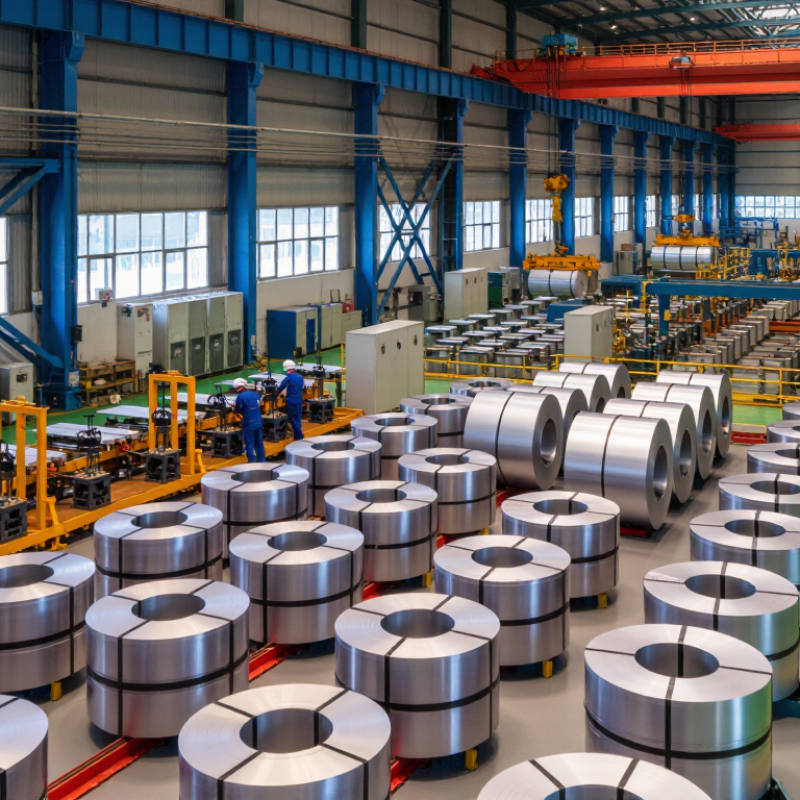
Transformer steel cores form the magnetic path inside power transformers. They guide alternating magnetic flux between windings. Most cores use thin, grain-oriented electrical steel sheets. Each sheet has an insulating coating. This layered structure limits eddy-current losses and reduces unwanted heating.
Core geometry affects efficiency, noise, and reliability. Step-lap joints can distribute magnetic flux more smoothly. Accurate cutting also reduces burrs and local hot spots. Experienced engineers check steel grade, thickness, coating quality, and measured core loss. They also review clamping pressure and joint alignment. A low-loss figure on paper is not enough. Poor assembly can weaken an otherwise excellent design. No core is perfect.
Tips: Ask suppliers for test certificates, batch traceability, and clear inspection records. Check whether data follows recognized electrical-steel standards. Examine sample edges for burrs before production approval. Confirm that packing prevents moisture, dust, and mechanical damage during transport. Small defects matter. A practical review should compare laboratory data with operating temperature, sound levels, and expected load patterns. Suppliers serving global buyers should communicate tolerances clearly and explain how they control variation between batches. This step is often missed.
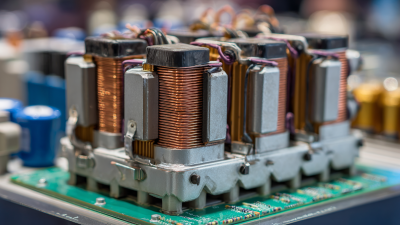
2026 Top Transformer Steel Core Suppliers for Global Buyers
When evaluating transformer steel core suppliers, start with measurable technical evidence. Ask for recent test reports showing core loss, magnetic flux density, and lamination factor. These figures should match the steel grade and thickness specified in your design. A polished sample can look impressive, yet poor burr control may increase losses during assembly. Inspect cut edges, coating consistency, and joint accuracy under suitable lighting. Small defects matter.
Production experience deserves equal attention. Reliable suppliers should explain annealing controls, slitting tolerances, stacking methods, and final inspection procedures. Request traceability from coil number to finished core. Confirm whether testing uses calibrated equipment and recognized international methods. Delivery capacity also matters. A supplier may produce excellent prototypes but struggle with repeated monthly orders. That gap is often overlooked. It should not be.
Tips: Compare at least three technical data sheets. Request samples from normal production, not special trial batches. Check packaging for moisture protection, especially during ocean transport. Discuss rejected-material handling before signing a purchase agreement. Ask for corrective-action records; an honest supplier can show weaknesses and improvements. Do not judge price alone. I have seen low quotations create higher costs through rework, delays, and unstable performance. A second factory audit may feel excessive, but it can reveal storage problems, mixed material lots, or rushed inspections.
This benchmark shows the recommended weighting of measurable criteria when comparing transformer steel core suppliers. Core-loss performance, dimensional consistency, material traceability, delivery reliability, quality systems, and technical support are commonly reviewed against relevant IEC transformer and electrical-steel requirements. The weighting is a neutral sourcing framework and does not represent the performance of any specific company or brand.
Rank 1 goes to suppliers with low-loss grain-oriented electrical steel, stable production, and traceable quality records. Their cores typically show precise joint gaps, clean laminations, and consistent magnetic flux performance. These details matter during factory acceptance testing.
Rank 2 includes manufacturers offering strong engineering support and flexible core designs. They can adjust step-lap geometry, stacking pressure, and insulation methods for different transformer ratings. Their testing normally covers core loss, excitation current, dimensional accuracy, and noise behavior. Experience shows that fast technical communication can prevent costly production delays. Still, delivery promises require careful verification.
Rank 3 represents dependable regional suppliers with competitive pricing and practical customization. They may perform well on standard distribution transformer projects, but buyers should examine capacity during peak demand. No ranking is perfect. I would recheck energy-loss data after repeated production batches, because one impressive sample cannot prove long-term consistency. Buyers should also review factory audits, material certificates, corrective-action records, and packaging methods. Moisture-resistant wrapping and reinforced wooden cases can protect finished cores during extended sea transport. Reliability is often visible in small habits.
For 2026 transformer steel core sourcing, buyers should compare manufacturing evidence, not only catalog ratings. Grain-oriented electrical steel must receive controlled annealing, insulation coating, and precise step-lap cutting. These processes reduce magnetic losses and audible vibration. Core joints deserve close inspection. Small burrs can increase localized heating.
IEC 60076 supports transformer performance testing, while IEC 60404-8-7 defines key requirements for grain-oriented electrical steel. Ask suppliers for lot-level steel certificates, core-loss test results, stacking-factor records, and dimensional reports. The U.S. Department of Energy’s 2024 distribution-transformer rule emphasizes lifecycle efficiency, showing why no-load losses matter during decades of service. The IEA Electricity 2024 report projects global electricity demand to grow by about 3.4% annually through 2026. More networks will need efficient, dependable cores. However, a higher grade does not guarantee better field performance. Design, clamping, transport, and assembly can weaken the result.
Tips: Request samples from three production lots. Compare loss values at the same induction and frequency. Confirm testing follows IEC 60076 or IEEE C57 methods. Check whether laboratories hold ISO/IEC 17025 accreditation. I would also inspect edge quality under magnification. It is a simple step, but often overlooked. Suppliers should explain corrective actions, not hide every deviation. Perfect records may look reassuring, yet realistic records reveal process control more honestly.
| Comparison Dimension | Recommended Benchmark | Why It Matters | Evidence to Request |
|---|---|---|---|
| Core material | Grain-oriented electrical steel, typically 0.20–0.30 mm thick for power-frequency transformer cores | Thin, grain-oriented material reduces core loss and improves magnetic performance when correctly processed | Material certificate, grade designation, thickness tolerance, guaranteed core-loss data and magnetic induction data |
| Applicable material standard | IEC 60404-8-7 or ASTM A876, as specified by the purchase contract | Defines technical requirements for grain-oriented electrical steel used in magnetic circuits | Conformity statement, inspection certificate and complete material traceability records |
| Core construction | Step-lap construction with controlled joint overlap and optimized corner geometry | Step-lap joints generally reduce localized flux concentration, no-load loss and audible noise compared with basic butt-lap joints | Assembly drawings, joint design specifications, overlap tolerances and process inspection reports |
| Cutting technology | High-speed precision slitting and cut-to-length processing with burr control | Excessive burrs, edge damage and dimensional variation can increase interlaminar eddy-current loss and reduce assembly accuracy | Burr-height records, width and length tolerances, cutting-machine calibration records and sample inspection results |
| Magnetic-domain refinement | Laser scribing or another qualified domain-refining process, where required by the design | Can reduce specific core loss in suitable electrical-steel grades when process parameters are controlled | Process qualification report, laser-scribing parameters, coating compatibility data and before/after loss measurements |
| Stress relief and annealing | Controlled stress-relief annealing when the material grade, coating and core design permit it | Cutting and forming stresses can impair magnetic properties; unsuitable heat treatment may damage insulation coatings | Furnace qualification, temperature uniformity records, atmosphere controls and post-treatment magnetic test data |
| Insulation coating | Uniform inorganic or semi-organic coating suitable for the specified interlaminar resistance and operating temperature | The coating limits circulating currents between laminations and supports stable core-loss performance | Coating type, interlaminar resistance test, surface inspection, adhesion results and temperature-class information |
| Dimensional accuracy | Documented tolerances for strip width, cut length, mitre angle, window dimensions and stack height | Accurate dimensions improve clamping, winding clearance, mechanical stability and repeatability during transformer assembly | Inspection plan, calibrated measuring equipment, dimensional reports and first-article approval records |
| Core-loss verification | Testing aligned with IEC 60404-2 or ASTM A343, using the agreed test frequency and peak magnetic flux density | Core-loss values are meaningful only when test conditions, specimen preparation and measurement methods are clearly defined | Laboratory test report, equipment calibration certificate, test conditions and acceptance limits |
| No-load loss performance | Guaranteed transformer no-load loss based on the purchaser’s specified rating, voltage, frequency and tolerance | No-load loss directly affects lifetime energy consumption because the transformer core remains energized during operation | Routine test report, guaranteed-loss schedule, correction method and contractual penalty provisions where applicable |
| Audible noise control | Core design and clamping practices evaluated against IEC 60076-10 or the buyer’s acoustic specification | Magnetostriction, joint design, clamping pressure and structural resonance all influence transformer noise | Acoustic test method, sound-pressure or sound-power data, test-room conditions and measured frequency spectrum |
| Mechanical clamping | Controlled clamping force with non-magnetic or appropriately selected structural components and documented torque values | Insufficient or uneven pressure may cause vibration; excessive pressure can distort laminations and increase losses | Torque records, clamping-force calculations, assembly work instructions and vibration inspection results |
| Quality management system | Certified ISO 9001 quality management system with documented corrective-action procedures | A controlled quality system supports repeatable production, traceability and systematic handling of nonconformities | Current certificate, certification scope, audit status, process-control plan and nonconformance statistics |
| Environmental management | ISO 14001-based environmental controls, especially for oils, solvents, scrap steel and energy use | Environmental controls reduce compliance risk and support responsible management of manufacturing waste and emissions | Environmental certificate, waste-disposal records, applicable permits and material safety documentation |
| Inspection and testing capability | Calibrated facilities for dimensional, electrical, magnetic, mechanical and visual testing | In-house or accredited testing shortens feedback cycles and improves control over production deviations | Calibration register, laboratory scope, sample test reports and third-party inspection acceptance procedure |
| Traceability | Heat, coil, slit batch and finished-core identification maintained through shipment | Traceability enables root-cause analysis, warranty support and verification of material origin | Barcode or lot-control procedure, material genealogy records and packing-list references |
| Export packaging | Moisture-resistant, impact-resistant packaging with corrosion protection and clearly marked lifting points | Long-distance transport can expose cores to humidity, shock and deformation if packaging is inadequate | Packaging specification, export photographs, moisture protection method, gross weight and handling instructions |
| Buyer acceptance criteria | Contract-specific limits for material grade, losses, dimensions, burrs, coating condition, noise and visual defects | Clear acceptance criteria prevent disputes caused by different interpretations of drawings, standards and test conditions | Approved drawings, quality plan, inspection and test plan, deviation procedure and signed pre-production sample approval |
Note: Final requirements should be confirmed against the transformer rating, operating frequency, applicable national regulations, purchaser specifications and the latest contractual editions of the referenced standards.
Global transformer steel core purchasing requires more than comparing quotations. The IEA’s Electricity 2024 report forecasts global electricity demand will grow by about 3.2% annually from 2024 to 2026. This expansion increases pressure on transformer and electrical steel supply chains.
Buyers should verify grain-oriented electrical steel grades, core-loss values, stacking factors, and lamination burr limits. Request mill certificates, batch traceability, and independent test results. IEC 60404-8-7 supports technical evaluation of grain-oriented steel, while IEC 60076 helps connect core performance with transformer design. Paperwork matters.
Logistics can quietly erase a price advantage. The U.S. Department of Energy’s 2024 transformer supply-chain assessment highlighted extended lead times and constrained electrical-steel availability. Ask suppliers about monthly capacity, safety stock, port options, moisture protection, and export documentation. A wooden crate should include desiccant, shock indicators, and clear lifting points. Small omissions become expensive.
In practice, landed cost needs more than freight. Include inspection, insurance, customs handling, inland delivery, and possible demurrage. Shorter routes are not always safer. One missed vessel can disrupt an entire production schedule. Supplier audits should examine annealing control, slitting accuracy, equipment maintenance, and corrective-action records. A low quote may still be useful, but only after risk is priced honestly. Even experienced teams sometimes overtrust certificates without checking whether the tested batch matches the shipped coils.