2026 Best Transformer Core Types for Global Buyers

In 2026, global buyers will evaluate transformer core materials against tighter efficiency targets, grid expansion, and volatile steel prices. The International Energy Agency’s Electricity 2024 report expects worldwide electricity demand to grow by an average of 3.4% annually through 2026. More power demand means more transformers, but not every transformer core suits every network.

Laminated grain-oriented electrical steel remains a practical choice for utility transformers. It offers proven manufacturing experience, strong mechanical durability, and broad supplier availability. Amorphous metal cores can reduce no-load losses, especially where transformers remain energized for long periods. The U.S. Department of Energy’s 2024 distribution transformer rule highlights lifecycle efficiency and projects substantial long-term energy savings after compliance begins. That policy direction matters for buyers comparing purchase price with operating cost.

Nanocrystalline cores support compact, high-frequency designs and specialized power electronics. Ferrite cores work well at higher frequencies, but they are not direct replacements for large utility transformer cores. The detail is important. Core loss, flux density, sound level, temperature rise, joint design, and coating quality can change real performance. IEC 60076 testing provides a useful technical reference, yet supplier data still requires careful verification.

There is no universal winner.

A low-cost silicon steel design may outperform an expensive amorphous option in a lightly loaded installation. Conversely, continuous operation can make lower no-load loss financially valuable. Buyers should request guaranteed loss figures, test reports, material certificates, and factory inspection evidence. Some comparisons still rely on optimistic laboratory values. That deserves skepticism. This guide examines the best transformer core types for global buyers, balancing efficiency, reliability, sourcing risk, and total ownership cost.
2026 Best Transformer Core Types for Global Buyers

What a Transformer Core Is and Why Core Type Matters

2026 Best Transformer Core Types for Global Buyers

What a Transformer Core Is and Why Core Type Matters

A transformer core is the magnetic path that transfers energy between windings. It concentrates magnetic flux and reduces the energy needed for induction. It is magnetic. Without a suitable core, a transformer may run hotter, louder, and less efficiently.

Laminated EI cores remain practical for industrial power transformers. Thin steel sheets reduce eddy-current losses and support economical production. Toroidal cores use a continuous ring, which can lower leakage flux and audible hum. They often suit compact equipment, but winding them may require more labor. C-cores provide flexible assembly and strong magnetic performance. Ferrite cores work well at high frequencies, especially in switch-mode power supplies. Amorphous metal cores can reduce no-load losses, although material availability and processing requirements may affect cost.

Core choice depends on frequency, voltage, load profile, temperature, size, and local service conditions. A buyer should request loss data at the intended frequency, not only a headline efficiency figure. Ask for insulation details, temperature-rise limits, test records, and applicable standards such as IEC 60076. I have seen specifications focus heavily on purchase price. That can miss lifetime energy losses. A spreadsheet can miss installation noise. Heat changes everything.

Global sourcing adds another concern. Core dimensions, steel grades, and test methods must be clearly documented. Tolerances matter. Small gaps can increase magnetizing current and vibration. Engineers should review samples under real load before approving volume production. No single core type is best for every transformer.

2026 Best Transformer Core Types for Global Buyers

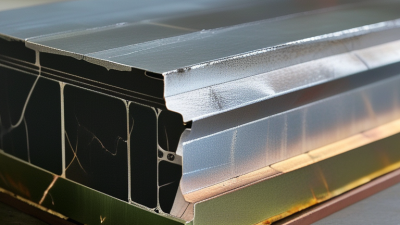
A transformer core provides the low-reluctance path that concentrates magnetic flux between the primary and secondary windings. Core material and construction affect efficiency, size, heat generation, noise, and operating cost.

How to read the chart: The ranges show typical 50/60 Hz design flux-density levels for common transformer core material classes. Higher usable flux density can support a smaller core, while lower-loss materials can improve efficiency and reduce no-load energy consumption. Actual values vary with frequency, temperature, lamination thickness, waveform, and safety margin.

How to Compare Transformer Core Materials and Magnetic Performance

2026 Best Transformer Core Types for Global Buyers
How to Compare Transformer Core Materials and Magnetic Performance

Choosing a transformer core starts with operating frequency, power level, temperature, and available space. Laminated silicon steel suits many low-frequency power transformers. Its cost is predictable, but core loss rises when frequency or flux density increases. Ferrite cores perform well at high frequencies and resist electrical losses. They can become fragile during assembly. Amorphous metal can reduce no-load loss, although its thinner ribbon needs careful handling. Nanocrystalline material offers high permeability and compact magnetic paths. It may cost more than conventional options.

Compare magnetic performance using real operating conditions, not only catalog values. Check core loss at the intended frequency, flux density, and temperature. Measure under load. Small gaps matter. A poorly controlled air gap can reduce inductance and increase heating. Saturation flux density also deserves attention, especially during startup or short overloads. Experience shows that winding design, clamping pressure, and stacking factor can change results noticeably.

Tips: Request test data for the exact core grade and dimensions. Confirm tolerances, insulation quality, and thermal limits with the manufacturer. Test sample cores in a controlled setup before approving volume production. Supplier figures may reflect ideal laboratory conditions, so review the test method carefully. No material wins every design. A slightly larger core may deliver better efficiency and lower lifetime risk. The “best” choice can change after noise, weight, and cooling requirements are added.

Key Transformer Core Types for Different Global Applications

2026 Best Transformer Core Types for Global Buyers

Key Transformer Core Types for Different Global Applications

Choosing a transformer core begins with the application, not the catalog label. EI laminated cores remain practical for mains-frequency transformers, control panels, and repairable industrial equipment. Their stacked steel sheets reduce eddy-current losses. However, assembly quality can affect noise, temperature, and long-term efficiency.

Toroidal cores suit medical devices, audio equipment, and compact power units. Their continuous magnetic path usually lowers stray fields and audible hum. Installation still requires careful winding and insulation. A small mistake may create uneven heating.

C-cores offer easier winding access and strong magnetic performance for industrial supplies. They can also simplify maintenance, although mechanical gaps need accurate control.

High-frequency converters commonly use ferrite cores, including E, ETD, and planar shapes. These designs support compact chargers, solar inverters, and communication equipment. Ferrite materials reduce high-frequency losses, but their operating temperature and switching frequency must match the design. Amorphous and nanocrystalline cores can improve efficiency in distribution transformers and renewable-energy systems. They often cost more and require more careful sourcing.

Global buyers should check voltage frequency, insulation class, cooling method, and regional certification needs. Material data matters more than appearance. I have seen compact cores selected correctly but paired with poor winding insulation. That choice weakened the whole transformer. Engineers should also review short-circuit strength, acoustic limits, shipping conditions, and local service skills. No core type wins everywhere. A balanced decision may still need revision after field testing.

How Voltage, Frequency, Power, and Efficiency Affect Core Selection

For global buyers, transformer core selection begins with voltage and frequency, not price.

The design relationship E = 4.44fNAB shows why: lower frequency requires more turns, larger core area, or reduced flux density.

A 50 Hz transformer cannot automatically use a 60 Hz core design. It may run hotter and lose efficiency.

Power rating adds another constraint. Higher kVA increases winding current and heat, while core size must control flux and no-load loss. Grain-oriented electrical steel suits conventional 50/60 Hz power transformers because it offers strong magnetic performance along the rolling direction.

Amorphous metal can reduce no-load losses, especially where transformers remain energized for long periods.
Ferrite is better for high-frequency converters, not ordinary grid-frequency units.

That distinction is often missed.

Regulatory data matters. The U.S. Department of Energy’s 2024 distribution-transformer rule projects substantial long-term national energy savings through improved efficiency requirements.

IEC 60076 and IEEE C57.12.90 provide widely used testing frameworks for losses, temperature rise, and dielectric performance.

Buyers should request test values at the actual voltage, frequency, and load profile. A catalog efficiency number may hide poor part-load behavior.

In practice, the cheapest core can become expensive when idle losses accumulate for twenty years. I would still verify the calculation, because real installations rarely match the assumed load curve.

Global Buyer Checklist for Sourcing the Right Transformer Core in 2026

2026 Best Transformer Core Types for Global Buyers

A reliable sourcing checklist starts with the application, not the lowest quotation. Record rated power, operating frequency, voltage, insulation class, and expected service temperature. Low-frequency power transformers often use laminated silicon steel cores. Ferrite suits many high-frequency designs. Amorphous and nanocrystalline materials can reduce losses, but their cost and processing requirements need careful review.

Measure the available window and mounting space before requesting samples. Ask suppliers for core-loss data at your actual frequency, flux density, and temperature. Generic figures can look impressive but may not match field performance. Request dimensional drawings, material certificates, test reports, and batch traceability. Check whether the supplier can provide consistent gap control and surface finishing. Small dimensional errors can affect winding fit.

Think beyond the core itself. Confirm minimum order quantities, sample charges, production capacity, lead times, export packing, and replacement procedures. Clarify accepted inspection methods and tolerances in writing. I have seen buyers approve a sample, then discover that later batches used different material grades. That mistake is expensive. A checklist helps, but it is not perfect. Recheck every critical value against the final datasheet and test report. Also review applicable safety, electromagnetic, environmental, and transport requirements for each destination market. Ask practical questions. Get measurable answers.

2026 Best Transformer Core Types for Global Buyers – Global Buyer Checklist for Sourcing the Right Transformer Core in 2026
Core Type Typical Material Typical Operating Frequency Approx. Saturation Flux Density at Room Temperature Typical Applications Main Advantages Key Trade-Offs Important Sourcing Checks
Laminated Grain-Oriented Electrical Steel Grain-oriented silicon steel laminations, commonly supplied in approximately 0.23–0.30 mm thicknesses for power-frequency designs. 50 Hz60 Hz Approximately 1.8–2.0 T, depending on grade, rolling direction, stress relief, joint design and temperature. Distribution transformers, power transformers, utility equipment, industrial control transformers and low-frequency isolation transformers. High magnetic flux capability; mature manufacturing process; strong availability; suitable for large power ratings; good performance at 50/60 Hz. Higher audible noise and core loss than advanced amorphous designs at comparable power-frequency conditions; performance is sensitive to cutting, burrs, clamping and joint quality. Verify thickness, tested core loss, magnetic induction, stacking factor, burr height, joint construction, insulation coating, annealing requirements and compliance with the applicable electrical-steel specification.
Amorphous Metal Rapidly quenched iron-based metallic glass, usually supplied as very thin ribbons, often around 0.02–0.03 mm. 50 Hz60 Hz Approximately 1.5–1.6 T, depending on alloy, operating temperature and design margin. Energy-efficient distribution transformers, especially units with significant no-load operating time. Very low specific core loss at power frequency; can reduce no-load energy consumption; well suited to efficiency-focused procurement requirements. Lower mechanical strength and lower saturation flux density than many silicon-steel designs; ribbon handling and core assembly require care; dimensions and joint design may limit interchangeability. Request guaranteed no-load loss at the specified voltage and frequency; confirm temperature-rise data, structural protection, ribbon handling method, core clamping, noise target and transport packaging.
Nanocrystalline Alloy Nanocrystalline iron-based alloy ribbon, commonly used in wound or cut-core configurations. Several kHzTens of kHzApplication-specific Approximately 1.2–1.5 T, depending on alloy composition, frequency, temperature and permissible operating margin. High-frequency transformers, current transformers, common-mode chokes, power electronics and compact isolation systems. High permeability; low core loss over selected high-frequency ranges; good common-mode performance; enables compact magnetic components. Material and processing costs can be higher; magnetic performance varies strongly with frequency, flux waveform, stress and heat treatment; mechanical handling is critical. Require loss curves at the actual frequency and peak flux density; verify permeability, heat-treatment condition, insulation system, cut-core gap, winding window and thermal derating data.
MnZn Ferrite Manganese-zinc soft ferrite, manufactured as molded E, U, RM, PQ, ETD, toroidal or other standardized core shapes. 20 kHz–500 kHzDesign-dependent Approximately 0.30–0.50 T at room temperature; usable flux density decreases with temperature and frequency. Switch-mode power supplies, high-frequency transformers, resonant converters, telecom power units and compact isolation transformers. High electrical resistivity; low eddy-current loss at high frequency; broad range of standardized shapes; cost-effective for volume production. Low saturation flux density compared with metallic cores; brittle material; core loss rises with unsuitable waveform, temperature or excessive flux swing. Check material grade, loss-versus-frequency curves, loss-versus-temperature curves, AL value, effective permeability, gap tolerance, dimensional tolerance, clamp pressure and fracture protection.
Iron Powder Core Insulated iron powder compact with distributed air gaps; available in toroidal and other pressed geometries. Several kHz–hundreds of kHzMaterial-specific Approximately 1.0–1.5 T, depending on powder composition, temperature and DC bias. Energy-storage inductors, boost converters, output chokes and selected high-frequency transformer or coupled-inductor designs. Distributed gap provides good DC-bias tolerance; high energy-storage capability; robust magnetic behavior for power inductors. Core loss can be higher than ferrite at many switching frequencies; permeability is lower; temperature performance and winding design require careful validation. Confirm initial and effective permeability, DC-bias curves, core-loss data, temperature rating, distributed-gap consistency, coating integrity and mechanical strength.
Sendust or High-Flux Powder Core Powdered alloy systems based on iron-silicon-aluminum or iron-nickel compositions, with distributed air gaps. Several kHz–hundreds of kHzDesign-dependent Typically about 0.8–1.5 T, depending on material family, temperature and DC-bias requirements. DC-bias-tolerant inductors, power-factor-correction stages, energy-storage inductors and high-current converter assemblies. Better DC-bias performance than ungapped ferrite; lower audible magnetostriction than some iron-powder designs; useful balance of permeability and energy storage. Not normally the first choice for high-power 50/60 Hz transformer cores; loss data differs considerably between material families and operating conditions. Check alloy family, permeability tolerance, DC-bias curve, core-loss curve, thermal stability, winding fill, insulation requirements and suitability for the actual magnetic waveform.
Global Buyer Checklist for Selecting a Transformer Core in 2026
Evaluation Dimension Buyer Requirement to Define Documents or Data to Request Acceptance Consideration
Electrical Rating Rated power, primary and secondary voltage, current, insulation level, frequency and permissible voltage waveform. Approved magnetic design, rated-current calculation and electrical test plan. The selected core must provide adequate volts-per-turn margin without excessive saturation, temperature rise or no-load loss.
Frequency and Waveform Line frequency or switching frequency, duty cycle, peak flux density, DC bias, ripple and transient conditions. Core-loss curves at the actual frequency, temperature, peak flux density and waveform where available. Do not compare core materials using loss data measured at different frequencies, flux densities or temperatures.
Core Loss Maximum no-load loss for power-frequency units or maximum core loss at the switching operating point for high-frequency units. Lot-level test results, measurement method, test temperature and tolerance statement. Use guaranteed values and test conditions rather than generic catalog values; verify whether the result is for material, assembled core or complete transformer.
Thermal Performance Ambient temperature, cooling method, maximum hot-spot temperature and required service life. Temperature-rise test, thermal model, derating curve and insulation temperature class. Confirm that core loss, winding loss and enclosure conditions are evaluated together at the worst-case operating point.
Mechanical Construction Core shape, dimensions, window area, stacking height, joint type, clamping method and allowable mass. Dimensioned drawings, tolerance table, assembly instructions and sample inspection report. Check mating surfaces, burrs, gaps, clamping pressure and protection against vibration, shock and ribbon or ferrite fracture.
Material Traceability Material grade, heat or lot identification, coating condition and processing history. Material certificate, lot traceability record, coating specification and incoming inspection procedure. Every production lot should be traceable to test results and the approved material specification.
Insulation and Safety Working voltage, impulse withstand, creepage, clearance, insulation system and environmental category. Insulation-system documentation, dielectric test records and applicable safety compliance evidence. Evaluate the complete core, bobbin, winding and impregnation system—not the core material alone.
Noise and Vibration Maximum sound level, mounting arrangement, magnetostriction sensitivity and operating load profile. Sound-power or sound-pressure test method, vibration test data and assembly controls. Specify the measurement distance, background-noise limit, operating voltage and load condition before comparing quotations.
Standards and Testing Applicable requirements for power transformers, magnetic materials, insulation, EMC and factory acceptance testing. Standards matrix, inspection and test plan, calibration records and sample test reports. Common references may include IEC 60076 for power transformers and IEC 60404 series standards for magnetic materials; confirm the exact applicable edition and market requirements.
Supply Continuity Annual demand, production lead time, minimum order quantity, approved alternatives and emergency replenishment needs. Capacity statement, lead-time schedule, safety-stock proposal and change-notification procedure. Require advance notification and approval for changes to material, tooling, dimensions, coating, heat treatment or manufacturing location.
Total Cost of Ownership Purchase price, freight, tooling, energy losses, inspection, rejection risk, maintenance and end-of-life considerations. Full quotation, loss guarantees, logistics assumptions and lifecycle-cost calculation. For continuously energized transformers, evaluate the cost of no-load losses over the expected service life rather than comparing purchase price alone.
Sample Validation Prototype quantity, validation duration, overload conditions, thermal cycling and reliability targets. First-article inspection report, prototype test results and corrective-action records. Approve the core only after testing the assembled transformer under electrical, thermal, mechanical and environmental conditions representative of final use.
Note: Flux-density, frequency, thickness and loss figures shown above are typical engineering ranges rather than universal guarantees. Final selection should be based on the material manufacturer’s tested data at the buyer’s actual frequency, waveform, temperature, voltage and mechanical construction.