What Is the Best China Transformer Steel Supplier?

Choosing the best China transformer steel supplier requires more than comparing prices. The decision affects transformer losses, temperature rise, service life, and long-term operating costs. Grain-oriented electrical steel must deliver stable magnetic performance, consistent thickness, and reliable insulation coating quality.

The International Energy Agency’s Electricity 2024 report expects global electricity demand to grow strongly through 2026. More transmission and distribution equipment will therefore be required. The U.S. Department of Energy’s 2024 Transformer and Power Electronics Supply Chain Review also identifies transformer materials as a critical supply-chain concern. These reports do not name one universal supplier. They show why careful qualification matters.

“Material consistency is the foundation of transformer efficiency,” says Dr. Martin J. Heath, an electrical-steel specialist. That principle sounds simple. It is not easy to verify.

A credible supplier should provide mill certificates, core-loss data, permeability results, coating specifications, and batch traceability. Ask for samples. Inspect edge quality and surface defects under proper lighting. Confirm whether test values match IEC or ASTM methods, rather than relying on promotional claims. Site audits can reveal storage problems, poor packaging, or weak process controls.

Our comparison will examine Chinese transformer steel manufacturers through technical performance, production capacity, export experience, certification, delivery reliability, and after-sales support. Price remains relevant, but it should not dominate the decision. A cheaper coil can become expensive after higher no-load losses, rejected laminations, or delayed production.

There is no flawless ranking. Supplier performance may vary by grade, thickness, order size, and application. That limitation deserves attention. The best choice is usually the supplier that can repeatedly prove its transformer steel quality under documented, independent evaluation.

What Is the Best China Transformer Steel Supplier?

What Is Transformer Steel and Why Does It Matter?

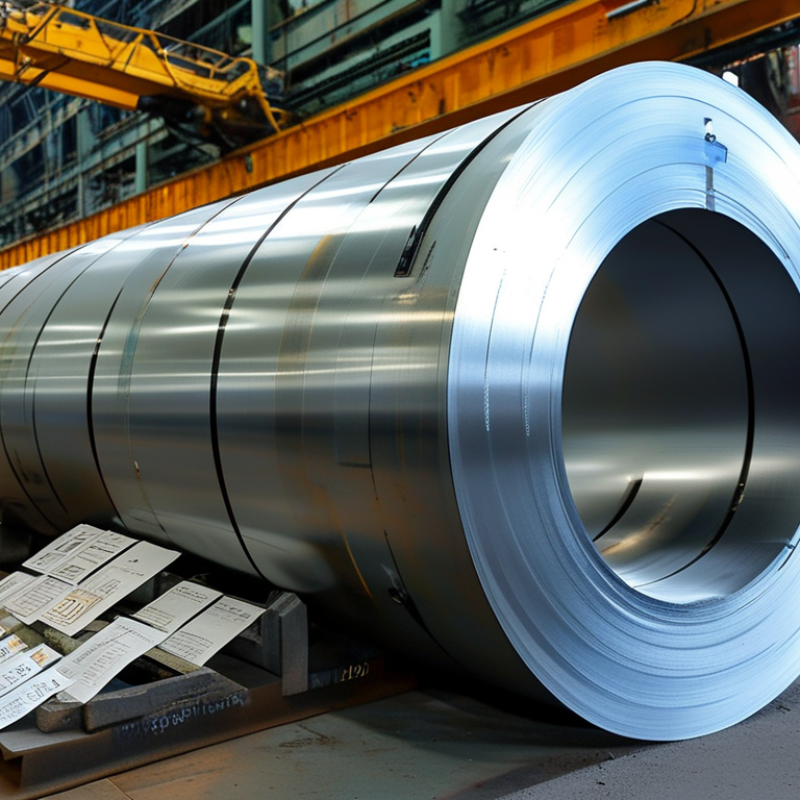
Transformer steel is a specialized electrical steel used in the magnetic core of power and distribution transformers. Its job is not simply to carry magnetic flux. It must guide that flux with minimal energy loss, heat, and noise.

During factory inspections, engineers examine grain orientation, coating quality, thickness tolerance, and burrs along cut edges. These small details matter. A poorly controlled edge can create extra losses between stacked laminations. High-quality steel also has low core loss and strong magnetic permeability. That helps a transformer operate efficiently under changing loads. In practical terms, the difference may appear as lower temperature at the core, quieter operation, and reduced electricity waste over many years.

Choosing a reliable China transformer steel supplier requires more than comparing price per ton. Ask for mill test certificates, loss data at defined flux densities, and clear traceability from coil to shipment. Sample testing is valuable, especially when the material will be slit or cut locally. Suppliers should explain production tolerances, surface insulation, packaging, and storage conditions. Moisture damage can begin before installation.

The difficult part is that specifications can look perfect on paper. They can still fail in production. A careful buyer should compare test results with actual lamination performance. That extra check takes time. It may prevent a costly redesign.

Which Qualities Define a Reliable China Transformer Steel Supplier?

A reliable China transformer steel supplier proves quality through repeatable data, not attractive quotations. The IEA’s Electricity Grids and Secure Energy Transitions report (2023) says annual grid investment must exceed USD 600 billion by 2030. This pressure makes stable material supply increasingly important. Buyers should request mill certificates, heat numbers, thickness tolerance, core-loss values, and magnetic induction results for every batch. Grain-oriented electrical steel should also match applicable IEC 60404-8-7 requirements.

Technical support matters as much as chemistry. A capable supplier can explain coating insulation, lamination quality, cutting burrs, and annealing control in clear language. Independent laboratory testing adds credibility. ISO 9001 certification is useful, but it is not proof of low core loss. That distinction is often missed. The U.S. Department of Energy’s transformer supply-chain reviews have highlighted extended transformer lead times and rising procurement pressure. A supplier with traceable production records, safety stock, and realistic delivery dates can reduce project risk. Still, promises need checking. One impressive sample does not prove stable monthly performance.

Tips: Ask for three consecutive batch reports, not one document. Compare test results with your design limits. Visit the plant, or appoint an independent inspector. Check whether packing prevents rust during humid sea transport. Confirm how rejected coils are isolated and replaced. A small weakness here can become a noisy transformer, higher losses, or delayed commissioning. Price matters, but unexplained price gaps deserve questions.

How to Compare China’s Transformer Steel Suppliers

What Is the Best China Transformer Steel Supplier?

How to Compare China’s Transformer Steel Suppliers

Choosing a transformer steel supplier requires more than comparing quotations. Start with the material specification, including grade, thickness, width tolerance, coating, and magnetic performance. For grain-oriented electrical steel, request tested core loss and magnetic induction at stated frequencies and flux densities. A value without test conditions is difficult to trust.

Ask for current mill certificates and batch-level traceability. Check whether the certificate matches the delivered coil, not just a previous shipment. Reliable suppliers should explain annealing, insulation coating, slitting, and edge quality in practical terms. Inspect sample strips for burr height, surface scratches, waviness, and coating damage. Small defects can increase stacking problems during core assembly.

Test samples independently when the order is important. A laboratory report can confirm core loss, permeability, and dimensional accuracy. Review packing details too: dry wrapping, moisture protection, coil support, and clear labels reduce damage during transport. Delivery history matters, but verified records matter more. Ask for production photographs, inspection procedures, and a realistic lead time.

Price can mislead.

I have seen comparisons focus heavily on cost per ton while ignoring yield loss during cutting. A cheaper coil may create more scrap or require extra sorting. Even experienced buyers can overlook this. Compare total usable material, technical support, replacement terms, and communication speed. A supplier that answers difficult questions clearly is often safer than one offering the lowest initial price.

What Is the Best China Transformer Steel Supplier?

How to Compare China’s Transformer Steel Suppliers

A practical way to compare transformer steel suppliers is to check the guaranteed core-loss level of the quoted grain-oriented electrical steel grade. The grade designations shown below represent maximum specific total loss values at 1.7 T and 50 Hz; lower values generally indicate better magnetic efficiency. Buyers should verify the quoted grade, test method, thickness tolerance, coating, surface quality, and mill test certificate before selecting a supplier.

What Certifications and Quality Tests Should Buyers Verify?

The best China transformer steel supplier is not chosen by price alone. Buyers should verify certificates, test methods, and traceable production records. ISO 9001 certification is useful, but its scope must cover the actual electrical steel factory. Check the certificate number, expiry date, audit body, and manufacturing address. A certificate without matching scope proves little.

For electrical steel, request magnetic test reports based on IEC 60404-2 or an equivalent ASTM method. The report should state grade, thickness, frequency, induction, core loss, and magnetic polarization. Ask for Epstein-frame or single-sheet tester results. Review coating insulation, stacking factor, burr height, width tolerance, and surface defects. Small burrs can damage insulation between laminations. That detail is easy to miss.

Supplier data should match independent inspection results. The U.S. Department of Energy’s 2024 distribution transformer rule projects 3.6 quadrillion Btu in energy savings over 30 years, showing why loss measurements matter. Request batch-level sampling, not one old laboratory report. Verify no-load loss at the agreed test point, because values can change with thickness and processing. It is tempting to trust a polished PDF. That is a mistake. Factory audits, retained samples, and third-party testing provide stronger evidence. Even accredited laboratories can report the wrong grade if sample identification is weak. Check the chain of custody.

What Is the Best China Transformer Steel Supplier? - What Certifications and Quality Tests Should Buyers Verify?

A reliable supplier should provide traceable certification, clearly defined material grades, independent or accredited test results, and production controls that match the buyer’s transformer design and applicable standards.

Verification Area Certification, Standard or Test What It Confirms Evidence Buyers Should Request Important Acceptance Points Priority
Supplier Management and Compliance
Quality management ISO 9001 certification Shows that the supplier operates a documented quality-management system covering production, inspection, corrective action and record control. Valid certificate, certification scope, issuing certification body, audit status and site address. The certificate should cover the actual manufacturing location and the relevant electrical-steel products. Required
Environmental management ISO 14001 certification Indicates systematic controls for environmental aspects, legal obligations, waste and resource management. Valid certificate and scope covering the production site. Useful for corporate sustainability programs and regulated supply chains; it does not replace product testing. Recommended
Occupational safety ISO 45001 certification Demonstrates a structured occupational-health-and-safety management system. Valid certificate, scope and latest surveillance or renewal status. Supports supplier-risk assessment but does not prove magnetic performance. Recommended
Product conformity Applicable product standard, such as IEC 60404-8-7, ASTM A876/A876M, JIS C 2553 or EN 10107 Defines relevant requirements for grain-oriented electrical steel, including grades, dimensions, magnetic properties and tolerances. Current standard edition, product datasheet, declaration of conformity and test reports referencing the selected standard. The correct standard depends on the destination market, transformer design and contract specification. Required
Laboratory competence ISO/IEC 17025 accreditation for the testing laboratory Confirms that a laboratory has documented competence for specified testing and calibration activities. Accreditation certificate, scope of accreditation, equipment list and report traceability. Verify that the requested magnetic and dimensional tests are included in the accredited scope. Recommended
Material Identity and Physical Quality
Material grade and orientation Grain-oriented electrical steel grade identification Confirms that the supplied steel is the specified grain-oriented material intended for transformer cores. Coil or slit-coil certificate, heat or coil number, grade designation, nominal thickness and coating code. Grade, thickness, coating and magnetic-performance requirements must match the purchase order. Required
Thickness Micrometer measurement at defined locations Verifies thickness consistency, which affects core dimensions, stacking factor and core loss. Inspection report showing nominal thickness, measured values, measurement locations and instrument calibration. Acceptance limits should follow the agreed product standard and purchase specification. Required
Width and slit accuracy Dimensional inspection Checks strip width, length, squareness and slit quality for core-cutting and assembly compatibility. Dimensional report, sampling plan and records for each coil or slit batch. Widths and tolerances should be agreed before production because core geometry is design-specific. Required
Burr height Edge-burr measurement after slitting Controls the raised edge produced during cutting, which can increase interlaminar shorting and reduce insulation performance. Burr-height results by slit batch, inspection method and calibrated gauge information. Set a contractual maximum based on the core design and applicable standard or internal specification. Required
Surface condition Visual inspection and coating-surface examination Identifies rust, oil contamination, scratches, wrinkles, dents, coating damage and other defects. Inspection checklist, representative photographs and nonconformance records. Surface defects should not compromise insulation, cutting, stacking or core assembly. Required
Mechanical properties Tensile or yield-property testing where specified Provides information about strip handling, cutting and resistance to damage during core manufacturing. Test report identifying sampling direction, specimen dimensions, test method and results. Use mechanical limits only when required by the design or purchase specification; magnetic performance remains the primary function. Conditional
Magnetic and Electrical Performance
Specific total loss Core-loss test at the specified flux density and frequency Measures the energy loss of the electrical steel under defined operating conditions, commonly reported in watts per kilogram. Test report stating frequency, peak flux density, specimen direction, sample preparation, temperature and measured loss. Do not compare values unless test conditions are identical. Contract limits should correspond to the transformer operating design. Required
Magnetic polarization Magnetic induction or polarization at a specified field strength Confirms the material’s ability to reach the required magnetic flux density with acceptable magnetizing force. Magnetic test curve or report with field strength, flux density, direction and test method. Verify the specified value and test conditions because results vary with grade, stress, sample preparation and measurement method. Required
Permeability Relative permeability or magnetization characteristic Indicates how readily the steel supports magnetic flux and helps assess excitation-current requirements. Test data or magnetic curve with the applicable field range and measurement method. Useful for design verification, especially when low no-load current is important. Recommended
Interlaminar insulation Surface insulation resistance or interlaminar resistance test Checks the electrical resistance between adjacent laminations and helps control circulating eddy currents. Coating type, test method, applied pressure or contact condition, measured resistance and sampling frequency. Acceptance values depend on coating system, test method and transformer-core construction. Required
Stacking factor Stacking-factor determination Measures the proportion of active steel in a stacked core relative to the total stack volume. Test method, sample dimensions, coating condition and calculated result. A lower value can reduce effective core area and increase design flux density; verify against the design assumption. Recommended
Magnetostriction and audible noise Magnetostriction or core-noise evaluation where specified Assesses dimensional vibration and potential contribution to transformer audible noise. Test conditions, excitation level, frequency, clamping condition and acoustic or strain results. Particularly important for low-noise distribution and power-transformer projects; requirements are application-specific. Conditional
Traceability, Sampling and Delivery Controls
Heat and coil traceability Material identification and batch-control system Links the delivered strip to its production records, chemical batch, coating line, test results and shipping documents. Coil number, slit-batch number, packing list, mill test certificate and matching labels on each package. Every slit coil or bundle should remain traceable from receipt through core production. Required
Certificate of analysis or mill test certificate Batch-specific material certificate Summarizes chemical, physical, dimensional and magnetic results for the supplied batch, as applicable. Original or digitally verifiable certificate with standard, grade, coil number, test date, results and authorized approval. Generic catalog data should not replace batch-specific results for critical transformer-core material. Required
Pre-shipment inspection Buyer-approved inspection and sampling plan Provides an agreed method for checking quantity, dimensions, appearance, packaging and selected performance results before dispatch. Inspection and test plan, sampling level, acceptance criteria, witness or hold points and signed inspection report. Define consequences for nonconforming material, including replacement, corrective action or independent retesting. Recommended
Packaging and corrosion protection Export packaging and storage specification Protects electrical steel from moisture, mechanical damage, contamination and edge corrosion during transportation and storage. Packaging specification, moisture protection method, handling instructions and photographs before shipment. Packaging must support the coil or slit material’s weight and prevent water ingress during the full logistics cycle. Required
Independent verification Third-party inspection or laboratory retest Provides an impartial confirmation of selected material properties and shipment conformity. Independent report identifying samples, chain of custody, methods, equipment and results. Consider independent verification for first orders, high-value projects, new suppliers or disputed results. Recommended

Buyer guideline: Certification validity, product scope, test method, sampling plan and acceptance limits should be checked against the current contract and applicable standard. No single certification proves that a supplier is the best choice; consistent batch performance, traceability, technical support and successful sample approval should be evaluated together.

How to Select the Best Supplier for Your Transformer Project?

What Is the Best China Transformer Steel Supplier?

How to Select the Best Supplier for Your Transformer Project?

Selecting a China transformer steel supplier requires more than comparing prices. IEA’s 2023 Electricity Grids report estimates annual grid investment must rise from about $400 billion to over $600 billion by 2030. This growth will increase demand for reliable grain-oriented electrical steel. Check core-loss data, permeability, thickness tolerance, coating quality, and aging performance. Test the evidence.

Ask for recent mill test certificates, batch traceability, and independent laboratory results. The data should match IEC 60404-8-7 or applicable ASTM requirements. Request samples from several production lots, not one carefully selected coil. Evaluate slitting accuracy, burr height, edge quality, and packing for humid transport. Small defects can increase transformer losses and assembly time.

Supply continuity deserves equal attention. A 2024 U.S. Department of Energy transformer supply-chain review reported distribution-transformer lead times reaching 12–24 months, compared with roughly 3–6 months previously. Ask about reserved capacity, raw-material sources, minimum order quantities, and emergency replacement plans. Audit the factory, inspect annealing and coating controls, and review corrective-action records. No checklist is perfect. A low quoted loss figure may still hide unstable production, delayed documents, or weak after-sales support. Keep options open.