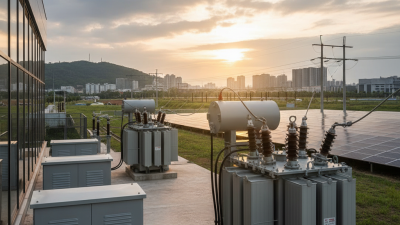
Buying a transformer across borders requires more than comparing prices and power ratings. The right choice must match the installation environment, local grid conditions, safety expectations, and long-term operating goals. This guide, “10 Transformer Design Tips for Global Buyers,” explains how practical transformer designs support reliable performance from factory testing to final commissioning.
Voltage and frequency are only the starting points. Buyers should verify phase configuration, insulation class, cooling method, impedance, tap range, ambient temperature, altitude, and enclosure protection. A transformer designed for a cool indoor plant may struggle in a humid coastal substation. Small details matter. Condensation can damage terminals. Poor ventilation can increase winding temperature. Excessive impedance can affect motor starting.
Experienced procurement teams also review core losses, load profiles, noise limits, maintenance access, spare parts, and transportation dimensions. Independent inspection, routine test reports, material certificates, and clear drawings improve confidence before shipment. Local engineers should confirm whether the design fits regional codes and utility requirements. Standards differ. Assumptions become expensive.
A reliable supplier should explain design trade-offs instead of promising every benefit at once. Lower purchase cost may mean higher energy losses or shorter service life. Compact construction may complicate repairs. Faster delivery may limit customization. These compromises deserve careful discussion.
Real projects rarely follow the original plan perfectly. Site conditions change. Data may be incomplete. That is why conservative margins, documented approvals, and realistic factory acceptance tests remain valuable. The following tips help global buyers ask better questions, reduce avoidable risks, and select transformer designs that perform reliably in demanding applications.
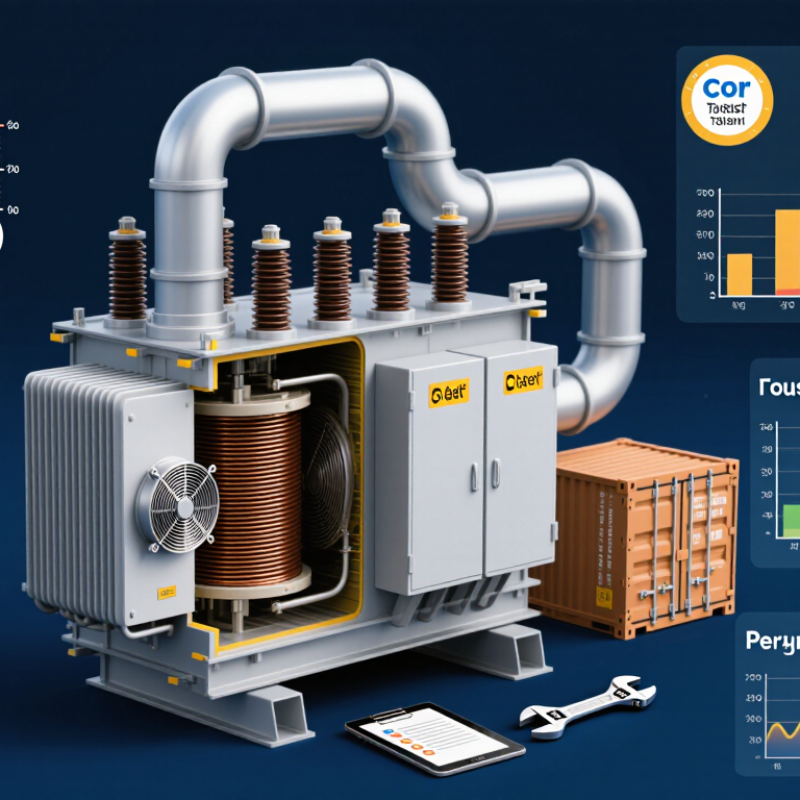
Global buyers should identify the transformer type before comparing prices.
Oil-immersed transformers suit outdoor substations and high-capacity networks.
Dry-type transformers fit buildings, tunnels, and locations requiring reduced fire risk.
Autotransformers can save material, but they do not provide electrical isolation.
This difference matters.
Tip: Match the type to the site.
Key design specifications deserve careful review.
State the rated power in kVA or MVA, primary and secondary voltage, frequency, impedance, vector group, insulation level, and cooling method. Check temperature rise, altitude, ambient conditions, short-circuit strength, and tap-changer range. IEC 60076 provides widely used transformer requirements, while IEEE C57 standards support testing and performance evaluation. The International Energy Agency reported in its 2023 Electricity Grids report that annual global grid investment may need to exceed USD 600 billion by 2030. More equipment will be needed, but rushed specifications can create long-term losses.
Tip: Compare total ownership cost, not only purchase cost.
During procurement, request guaranteed no-load and load losses, routine test reports, noise data, dimensions, terminal arrangements, and maintenance intervals.
Confirm whether the design suits local humidity, dust, salt, and voltage fluctuations. A smaller transformer may reduce initial cost, yet overload risk can shorten service life. I have seen projects focus heavily on efficiency while overlooking access for inspection. That is an avoidable weakness. A perfect specification rarely exists. Clear priorities do.
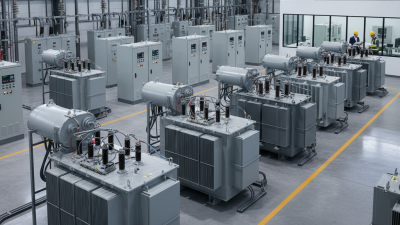
10 Transformer Design Tips for Global Buyers
Tip 1: Verify voltage and frequency together. A 230 V, 50 Hz transformer may not suit a 230 V, 60 Hz system. Frequency affects heating, core performance, and noise. Check the actual supply, not only the country name. I have seen projects fail because regional voltage data was copied from an old specification.
Tip 2: Size power from the real load. Compare the transformer’s VA rating with motors, controls, lamps, and standby devices. Motors can draw several times their running current during startup. Add reasonable headroom, but avoid excessive oversizing. A huge transformer may cost more and operate inefficiently at light loads. Measure the load when possible. Estimates can be misleading. Also check duty cycle, ambient temperature, and enclosure conditions. These details influence continuous performance.
Tip 3: Match the application and installation environment. Control panels may need stable secondary voltage, while industrial equipment may require strong inrush handling. Ask about isolation, regulation, grounding, insulation class, cooling, and connection terminals. A dusty factory, humid room, or outdoor cabinet may require different protection. Confirm local electrical requirements before production. Documentation should clearly show input, output, frequency, VA, wiring, temperature limits, and test results. I once treated documentation as paperwork only; that delayed troubleshooting later. Clear records are part of reliable transformer selection.
| No. | Design Dimension | Typical Values or Selection Guidance | What Global Buyers Should Confirm | Technical Reason |
|---|---|---|---|---|
| 1 | Primary Voltage | Common low-voltage supply systems include 100/110/120 V, 220/230 V, and 240 V. Medium-voltage distribution commonly includes 3.3 kV, 6.6 kV, 10/11 kV, 20 kV, and 33 kV. | Specify the actual nominal input voltage, allowable variation, phase arrangement, and whether the supply is line-to-line or line-to-neutral. | A transformer designed for the wrong primary voltage can produce excessive secondary voltage, overheating, poor regulation, or insulation stress. |
| 2 | Secondary Voltage | Typical secondary outputs include 12 V, 24 V, 48 V, 110 V, 120 V, 220 V, 230 V, and 400/415 V, depending on the load and distribution system. | State the required no-load and full-load output voltage, acceptable tolerance, and whether the output must be isolated from the input. | Transformer voltage regulation causes the output voltage to change between no-load and rated load. The required regulation depends on the connected equipment. |
| 3 | Frequency Compatibility | 50 Hz and 60 Hz are the principal utility frequencies worldwide. A transformer designed only for 50 Hz should not automatically be operated at 60 Hz without technical confirmation. | Confirm the operating frequency and whether the transformer must support both 50 Hz and 60 Hz. | Core flux is proportional to voltage divided by frequency. Operating at a lower frequency than specified can increase flux, magnetizing current, noise, and core heating. |
| 4 | Rated Power | Transformer capacity is normally stated in VA or kVA. For a single-phase load: kVA = V × A ÷ 1,000. For a three-phase load: kVA = √3 × V × A ÷ 1,000. | Calculate the maximum continuous load, include motor-starting or inrush demand, and allow a practical margin rather than sizing only for the present average load. | Transformers are rated by apparent power because both voltage and current create thermal stress, while power factor determines how much real power the load consumes. |
| 5 | Phase Configuration | Single-phase transformers are common for control, lighting, and small equipment. Three-phase transformers are common for industrial distribution and three-phase motors. | Identify the number of phases, neutral requirements, winding connection, and vector group where applicable. | Common three-phase connections include delta and wye. A wye secondary can provide a neutral point, while a delta connection may be suitable for specific motor and industrial systems. |
| 6 | Load Type and Inrush | Resistive loads are generally predictable. Motors, solenoids, contactors, LED drivers, rectifiers, welders, and power supplies can create high starting or magnetizing currents. | Provide the load's starting current, starting duration, duty cycle, power factor, crest factor, and any repeated-start requirements. | A transformer may meet the steady-state kVA requirement but still experience excessive voltage drop or nuisance protection trips during load startup. |
| 7 | Insulation and Isolation | Isolation transformers use electrically separate primary and secondary windings. Dielectric withstand, insulation class, creepage, and clearance depend on the voltage and applicable safety standard. | Confirm whether galvanic isolation, a grounded shield, an electrostatic screen, reinforced insulation, or a defined neutral-to-ground connection is required. | Isolation can reduce the direct transfer of certain common-mode disturbances and may improve personnel or equipment protection when correctly installed and grounded. |
| 8 | Cooling and Environment | Dry-type transformers commonly use natural air cooling, while larger units may use forced air. Oil-immersed units use liquid insulation and cooling. Ambient temperature, altitude, humidity, dust, and enclosure rating affect capacity. | Report the maximum and average ambient temperature, installation altitude, indoor or outdoor location, ventilation, humidity, dust, corrosive agents, and enclosure requirements. | High altitude reduces air density and cooling performance. Severe environments may require derating, special coatings, sealed construction, or a higher ingress-protection level. |
| 9 | Taps and Voltage Regulation | Off-circuit taps commonly provide adjustment steps such as ±2.5% or ±5%, depending on the design. On-load tap changers are used where voltage must be adjusted while energized. | Provide the expected supply-voltage variation, desired secondary voltage, tap range, tap step, and whether tap changes can be made only when de-energized. | Taps compensate for supply or distribution voltage differences, but off-circuit taps require isolation and a verified de-energized condition before adjustment. |
| 10 | Efficiency, Losses, and Compliance | Transformer losses include no-load core loss and load-dependent winding loss. Efficiency is highest near the operating point where useful output power is large compared with total losses. | Request guaranteed no-load loss, load loss, impedance, efficiency or energy-performance data, temperature-rise limits, routine-test records, and the standards required for the destination market. | Impedance affects fault current and voltage regulation. Applicable requirements may include IEC, IEEE, or regional electrical and safety rules; the exact standard depends on the installation. |
10 Transformer Design Tips for Global Buyers
Material selection begins with lifetime loss, not purchase price. Grain-oriented electrical steel reduces magnetic losses in the core. Amorphous metal can reduce no-load losses further, although availability and mechanical strength require review. The U.S. Department of Energy’s Distribution Transformer Technical Support Document notes that transformers remain energized for roughly 8,760 hours annually. Small losses accumulate continuously. Ask suppliers for tested no-load and load-loss values, not only efficiency percentages.
Cooling choice affects reliability, size, and maintenance. Mineral oil provides strong heat transfer, while ester fluids can offer improved fire performance and biodegradability. Dry-type designs suit indoor installations but may require larger enclosures and careful ventilation. Cooling matters. Check ambient temperature, altitude, dust, humidity, and expected overloads together. IEC 60076-based test records can help verify temperature-rise claims, but field conditions still differ from laboratories.
Energy demand is rising. The International Energy Agency’s Electricity 2024 report projects global electricity consumption growth averaging about 3.4% annually from 2024 to 2026. Efficient transformers therefore support both grid capacity and operating budgets. Specify low-loss cores, optimized windings, and monitoring for temperature and partial discharge where practical. Digital monitoring is useful, but it is not automatically economical for every small unit. I would also question oversized designs; they may reduce heating, yet their constant no-load losses can become an expensive compromise.
Global transformer buyers should treat compliance as a design requirement, not a document check. IEC 60076 covers power transformer performance, testing, and safety principles. IEEE C57 standards may apply in North American projects. These systems are not interchangeable. Confirm the destination country, voltage, frequency, insulation level, and installation environment before requesting quotations.
A certificate can still hide a weak assumption. Check whether it covers the exact model, rating, accessories, and production site. Request routine test records, type-test evidence, temperature-rise results, short-circuit withstand data, and material traceability. For oil-filled units, review fire protection, leak control, and fluid safety requirements. For dry-type units, examine enclosure ratings, ventilation, and fire behavior. Independent laboratory verification adds confidence, but it does not replace factory inspection.
The scale makes small errors expensive. The International Energy Agency reported that more than 80 million kilometers of grids must be added or refurbished by 2040. Its 2023 report also calls for annual grid investment to rise above 600 billion dollars by 2030. Buyers should therefore verify compliance before shipment, not after installation. CE marking, national approvals, and utility acceptance may involve different responsibilities. The process can feel repetitive. It is still worth repeating. A missing test record, incorrect nameplate, or misunderstood local rule can delay energization and damage trust. (Sources: IEA, Electricity Grids and Secure Energy Transitions, 2023; IEC 60076; IEEE C57 standards.)
10 Transformer Design Tips for Global Buyers
Global transformer purchasing begins with supplier evidence, not polished brochures. Check factory experience with similar voltage, capacity, climate, and installation conditions. Review audited financial records and recent project references. Inspect production areas, winding equipment, drying systems, and final-test facilities. Confirm that qualified engineers approve drawings and material substitutions. Ask how the supplier controls design changes. Small details matter. A missed revision can delay production by weeks.
Quality testing must match the destination and service duty. Request certified routine and type-test reports for insulation, temperature rise, losses, impedance, noise, and partial discharge. Witness factory acceptance testing when practical. Use an independent laboratory for critical measurements. Compare test values with guaranteed limits, not only pass-or-fail statements. Inspect core clamping, winding alignment, terminal markings, and enclosure protection. Photographs help, but they cannot replace inspection. Testing plans sometimes look complete while missing overload conditions.
Evaluate total cost, not only the quoted transformer price. Include copper and steel adjustment clauses, engineering, spare parts, packaging, insurance, duties, installation support, and commissioning. Check the delivery schedule against long-lead materials and port congestion. Require milestone payments linked to approved drawings, material inspection, and factory acceptance. Confirm the agreed delivery term and responsibility for damage. Keep a practical contingency for transport delays. No plan is perfect. I have seen buyers accept the lowest offer, then face costly redesign work after installation. A careful contract should define remedies, documentation, warranty response times, and escalation contacts before production starts.
Recommended 100-point evaluation framework covering suppliers, testing, cost control, and delivery risk.
Use the highest-weighted checks first: verify supplier capability, confirm the technical specification, require IEC 60076-related testing where applicable, control material and efficiency costs, and reduce delivery risk through approved drawings, inspection points, spare-parts planning, and documented logistics.