Why Choose an Energy Efficient Transformer?

Choosing an energy efficient transformer can reduce electricity losses throughout years of daily operation. The benefit is easy to overlook because the unit may sit quietly in a locked electrical room. Yet even a small, continuous loss adds heat and contributes to operating costs. Energy savings matter most where transformers run for long hours or carry steady loads.

A careful comparison looks beyond the purchase price. Engineers consider no-load losses, which occur whenever a transformer is energized, and load losses, which vary with demand. Core materials, winding design, cooling, and expected loading all influence performance. A facility manager might review utility bills, load records, available space, and maintenance needs before choosing a model. The right choice depends on the actual operating profile, not a label alone. Small details matter.

Higher efficiency can involve a higher initial cost, so payback estimates deserve realistic assumptions. Electricity prices may change, and a lightly loaded transformer might not deliver the savings expected from a busy one. That is worth checking. Installation quality and periodic inspections also affect long-term results. Even a well-designed transformer cannot compensate for poor connections or unsuitable sizing. The phrase “energy efficiency transformer” sounds straightforward, but selecting one takes context and careful verification. A practical assessment should compare documented loss data and total ownership costs, then revisit those assumptions after the equipment is operating.
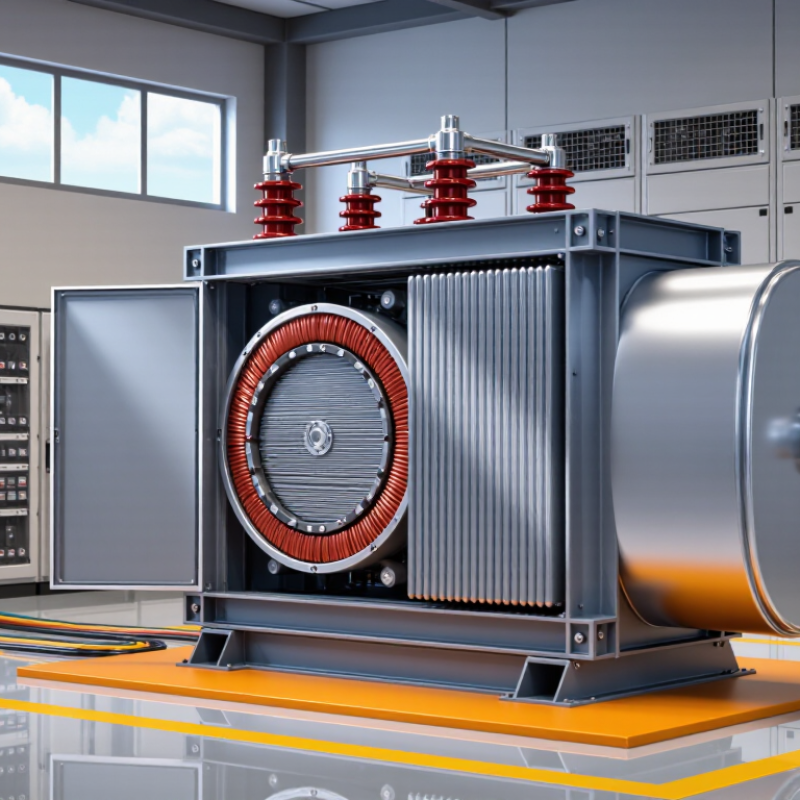
Why Choose an Energy Efficient Transformer?

What Defines an Energy-Efficient Transformer and Its Rated kVA?

An energy-efficient transformer limits the electrical energy lost as heat while transferring power. Two losses matter: core losses occur whenever the unit is energized, while winding losses rise with load. Small losses add up. Over a year, even modest improvements can reduce wasted electricity, especially in equipment that runs around the clock.

Its rated kVA describes the apparent power the transformer can handle under specified conditions. It is not the same as usable kilowatts: at a power factor of 0.8, a 100 kVA unit supplies about 80 kW of real power. That distinction matters when estimating capacity. A rating alone does not tell you how efficiently the transformer will operate at your actual load.

Sizing deserves a closer look. A unit that is consistently overloaded may run hot, while a much larger unit can carry unnecessary core losses even when lightly loaded. Compare efficiency data at expected operating loads, and check the stated cooling method, ambient temperature, and test conditions. Real load patterns are rarely neat; measurements from the site can reveal details a simple estimate misses.
How Core and Winding Losses Shape Efficiency Under IEC 60076-20

Why Choose an Energy Efficient Transformer?

How Core and Winding Losses Shape Efficiency Under IEC 60076-20

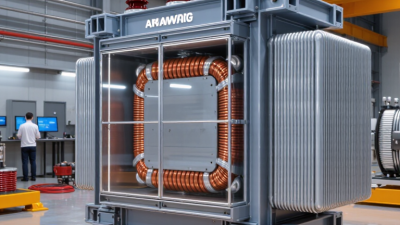
Transformer efficiency depends on two main loss sources. Core losses occur whenever the transformer is energized, even when it supplies little load. They arise from repeated magnetisation of the core and depend on factors such as voltage, frequency, and core material. Winding losses come from electrical resistance. As current rises, these losses increase roughly with the square of the load, while winding temperature also affects resistance.

The distinction matters in everyday operation. A lightly loaded transformer may be dominated by steady core losses; a heavily loaded unit can incur much greater winding losses. IEC 60076-20 provides efficiency requirements and calculation methods, including the Peak Efficiency Index (PEI), which helps compare performance under defined conditions. It is not a substitute for matching a transformer to its real load profile.

Design choices involve trade-offs. Lower-loss core materials can reduce energy use over years of continuous service, but may affect cost, dimensions, and manufacturing complexity. Winding geometry and conductor selection also influence resistance and heat. In practice, measured results can differ from estimates because operating temperature and load vary. Small details matter. A careful specification should therefore consider expected loading, not just the nameplate rating. One assumption is easy to miss: the most efficient option at one load may not be best across an entire operating day.

Why Choose an Energy Efficient Transformer? — How Core and Winding Losses Shape Efficiency Under IEC 60076-20

This example shows how transformer losses affect operating efficiency and why both no-load and load losses matter.

Example basis: The figures below are illustrative engineering calculations, not test results or guaranteed product values. Assumptions: a 1,000 kVA transformer, 1.2 kW no-load loss, 10.0 kW load loss at rated current, unity power factor, and load losses expressed at the applicable reference temperature. Consult IEC 60076-20 and applicable local requirements for the relevant assessment method and scope.
Loss components and their effect on energy use
Loss component Typical physical cause How it varies with operation Efficiency implication
Core (no-load) loss Magnetisation of the core, including hysteresis and eddy-current effects. Present whenever the transformer is energised; primarily influenced by voltage, frequency, and core design. Accumulates over energised hours, including periods of light load or no load.
Winding (load) loss Resistive heating in windings, commonly described by the I²R component. Increases approximately with the square of load current; actual load-loss measurements also account for applicable stray-loss components. Becomes increasingly important as the transformer carries higher loads.
Total operating loss Combined no-load loss and load-dependent loss. For this simplified example: Ploss = P0 + β²Pk, where β is the fraction of rated load. Lower total losses mean less input energy is required to deliver the same output.
Calculated efficiency at different load levels
Load level Output power Core loss Winding/load loss Total loss Calculated efficiency
25% 250 kW 1.20 kW 0.63 kW 1.83 kW 99.28%
35% 350 kW 1.20 kW 1.23 kW 2.43 kW 99.31%
50% 500 kW 1.20 kW 2.50 kW 3.70 kW 99.27%
75% 750 kW 1.20 kW 5.63 kW 6.83 kW 99.10%
100% 1,000 kW 1.20 kW 10.00 kW 11.20 kW 98.89%

Calculation: Efficiency = output power ÷ (output power + total losses) × 100. Values are rounded. Actual efficiency depends on tested losses, voltage, frequency, load profile, power factor, and operating conditions. Lower core loss can be especially valuable when a transformer remains energised for long periods; lower winding loss can reduce energy waste during heavily loaded operation.

How U.S. DOE 2016 Standards Set Minimum Efficiency by kVA Rating

Why Choose an Energy Efficient Transformer?

The U.S. Department of Energy’s 2016 standards set minimum efficiency levels for many distribution transformers. The required level depends on the transformer’s kVA rating and its category, including whether it is liquid-immersed or dry-type. Phase and voltage class can matter, too. So a single efficiency figure cannot describe every unit.

For a practical comparison, match the equipment type and nameplate kVA to the applicable DOE table. The standard is a floor, not a promise of identical energy use in every building. A transformer serving a lightly loaded workshop may have a different loss profile from one running near capacity in a commercial facility. DOE evaluates efficiency under defined test conditions, while actual losses vary with load and operating hours. That distinction is easy to miss. Even a compliant unit can waste more energy than a carefully selected, higher-efficiency option. Check the specification, operating pattern, and expected service life before comparing purchase prices. The details matter. A small mismatch in rating or transformer category can lead to an incorrect comparison.

Why Choose an Energy-Efficient Transformer?

U.S. DOE 2016 Minimum Efficiency Standards by kVA Rating

The chart shows the DOE minimum efficiency levels for three-phase, low-voltage dry-type distribution transformers. Larger kVA ratings generally have higher minimum efficiency requirements. Efficiency is evaluated at 35% of rated load under the DOE test procedure. Requirements differ for other transformer categories.

Source: U.S. Department of Energy, 10 CFR Part 431, 2016 distribution transformer standards.

How Avoiding 1 kW of Continuous Loss Saves 8,760 kWh per Year

Why Choose an Energy Efficient Transformer?

A transformer losing 1 kW continuously consumes 8,760 kWh in a 365-day year. The calculation is simple: 1 kW multiplied by 8,760 operating hours. That is electricity used before the transformer delivers useful power. At an illustrative rate of $0.10 per kWh, the loss costs $876 annually. Small on paper. Persistent in practice.

The U.S. Department of Energy’s 2016 Distribution Transformers Technical Support Document assesses both no-load and load losses when comparing transformer efficiency. No-load losses continue even when demand is low, so they matter in facilities that operate around the clock. Picture a quiet electrical room at night: lights off, machinery idle, but the transformer still drawing power. Over a year, that steady loss adds up. Actual savings depend on operating hours, loading, electricity prices, and the replacement unit’s performance.

When evaluating a transformer, compare measured loss figures under relevant operating conditions, not efficiency labels alone. A lower-loss model may cost more upfront, and the payback estimate can be wrong if the load profile is guessed. That deserves a second look. Yet reducing a verified 1 kW of continuous loss avoids 8,760 kWh of annual energy use, with no change to the facility’s production schedule.

How Lower Transformer Losses Reduce Lifetime Costs and Grid Emissions

An efficient transformer does not create electricity; it wastes less of it while transferring power. Core losses occur whenever the unit is energized, even during quiet hours. Winding losses rise as current increases, so a transformer serving a variable load can waste energy differently throughout the day. The heat is easy to overlook. Yet over years, small losses accumulate into substantial energy use and operating cost.

Lower losses can reduce the amount of electricity a utility must generate or purchase. That can also lower grid emissions, although the effect depends on which generators meet demand. A coal-heavy supply mix may show a different emissions benefit from a grid rich in renewables. Real comparisons should use measured load profiles, local energy prices, and credible loss data—not only a nameplate figure. There is a catch: a more efficient unit may cost more upfront, and payback depends on its actual duty cycle, expected service life, and financing assumptions. I would not treat a spreadsheet forecast as a guarantee. Reviewing operating records and checking the assumptions with a qualified engineer makes the lifetime-cost estimate more trustworthy.