Choosing the right transformer core supplier can determine whether a transformer performs reliably or fails under real operating stress. Core material, geometry, losses, tolerances, and production consistency all influence the final result. A low quotation may look attractive, but it can hide higher winding losses, extra heat, or unstable efficiency.
The decision should begin with application evidence. Ask suppliers for core-loss data at your actual frequency, flux density, temperature, and waveform. Request material certificates, dimensional tolerances, inspection records, and representative samples. A supplier experienced with power transformers may not understand high-frequency ferrite requirements. The opposite can also happen.
Charles Proteus Steinmetz, a leading electrical engineering expert, said, “The alternating current is the greatest discovery of the nineteenth century.” His statement highlights why magnetic performance deserves careful attention. The transformer core remains central to that performance, even when modern designs appear highly automated.
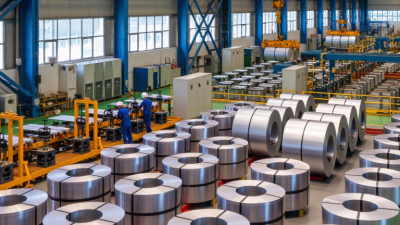
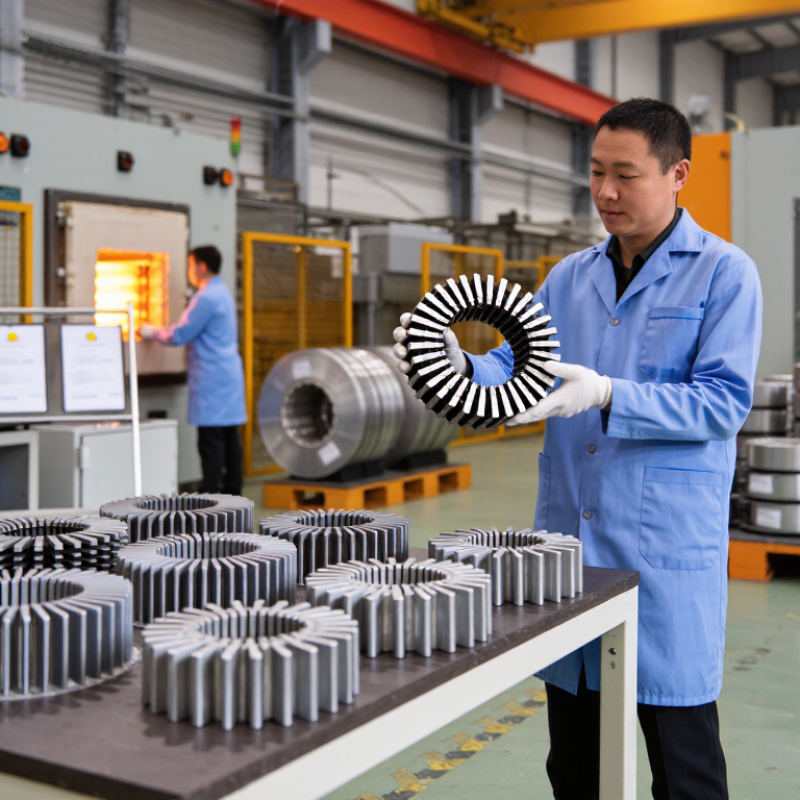
A dependable supplier should explain its testing methods clearly. Look for controlled annealing, accurate cutting, careful stacking, and traceable batch management. Visit the factory when possible. Observe how workers handle thin laminations. Small scratches can become meaningful losses in demanding applications.
Price still matters. It should not lead the evaluation. Delivery capacity, engineering support, corrective-action speed, and long-term material availability deserve equal attention. A supplier may provide excellent samples but struggle during volume production. That weakness is easy to miss.
No checklist is perfect. Your own assumptions may be incomplete. Compare measured results with datasheet claims, and test cores in the finished transformer design. The right transformer core supplier is not simply the cheapest source. It is the partner that can repeatedly meet technical, commercial, and quality expectations.
Defining your transformer core requirements starts with the operating point, not the supplier’s catalogue. Record rated power, primary and secondary voltage, frequency, insulation level, cooling method, and installation altitude. Then separate no-load losses from load losses. The U.S. Department of Energy’s distribution-transformer analysis reports that amorphous-metal cores can reduce no-load losses by roughly 60% compared with conventional grain-oriented electrical steel designs. That figure matters most when the transformer remains energized for long periods.
Measure the details carefully. Core window size affects winding space, thermal paths, and short-circuit strength. Flux density must match the material grade and frequency; excessive density can increase noise and heating. IEC 60076 testing requirements should guide loss, temperature-rise, and dielectric verification. Ask for certified test records, dimensional tolerances, stacking-factor data, and traceable material certificates. The International Energy Agency has also identified grid expansion and equipment efficiency as important factors in future electricity-system investment. Capacity alone is not enough.
Small errors become expensive.
In practical sourcing, I compare the supplier’s calculated losses with independent test results, not marketing estimates. I also check whether the core can tolerate transport vibration and repeated energization. One weakness in my own early evaluations was focusing too heavily on initial price. Lifecycle losses changed the decision. Your final specification should state acceptable loss limits, noise targets, mechanical constraints, inspection stages, and documentation requirements. Leave no critical assumption unwritten.

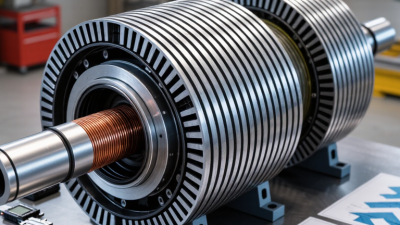
Choosing a transformer core supplier starts with the material, not the catalog price. Silicon steel suits many 50 or 60 Hz power transformers because it handles magnetic flux efficiently. Ferrite cores support higher-frequency applications and can reduce eddy-current losses. Nanocrystalline materials may deliver high permeability, but they often require tighter processing controls and higher budgets.
Core design changes real performance. A laminated EI core is practical and easy to assemble. Toroidal designs can reduce leakage flux and audible vibration, although winding work may become more demanding. Cores with precise air gaps help control inductance in energy-storage applications.
I check loss data at the intended frequency, flux density, and temperature. A figure without test conditions proves little. That mistake is common.
Supplier reliability also depends on evidence. Ask for dimensional tolerances, material certificates, thermal test results, and batch traceability. Request samples before approving mass production. Measure temperature rise, no-load loss, noise, and insulation distance in the finished assembly. Keep records from incoming inspection. Small burrs or uneven joints can quietly increase losses. I have learned that a technically impressive core can still fail when winding space is underestimated. Sometimes the better choice is not the most advanced material, but the one consistently produced within tolerance. Supplier communication matters. Slow answers often reveal weak process control.
Choosing a transformer core supplier requires more than comparing prices. Manufacturing quality begins with steel traceability, controlled cutting, and stable lamination stacking. Ask for material certificates, batch records, and core-loss test results. Check the details.
IEC 60076 testing principles support evaluation of losses, insulation performance, temperature rise, and mechanical integrity. A capable supplier should explain its measurement equipment and calibration schedule. It should also provide samples from normal production, not only from a laboratory line.
In my experience, a polished factory tour can still hide weak process control. Witnessing a core assembly reveals practical details, including burrs, gaps, clamping pressure, and handling damage. These small defects may increase noise and no-load losses.
Market pressure makes this review more important. The International Energy Agency reported in Electricity Grids and Secure Energy Transitions that annual grid investment must exceed 600 billion dollars by 2030, nearly doubling current levels. The U.S. Department of Energy’s Transformer Resilience and Advanced Components Supply Chain Review also identifies limited capacity and long lead times as supply-chain risks.
Therefore, assess production capacity, maintenance planning, backup equipment, and workforce training. Request quality data across several batches. One excellent report proves little.
Supplier audits should include nonconformance records, corrective actions, and final inspection images. Some suppliers may resist these requests. That resistance is itself useful evidence. A supplier can promise tight tolerances, yet the real test is repeatability under ordinary factory conditions.
Choosing a transformer core supplier requires more than comparing prices. I begin by checking certifications and their exact scope. A certificate should name the manufacturing site, covered processes, and expiration date. ISO 9001 can indicate controlled quality procedures, but it does not guarantee every core meets your design needs. Ask for recent test reports, material traceability, and inspection records. For electrical projects, review relevant IEC or UL requirements with an experienced engineer. Documents matter. So does verification.
Delivery capacity deserves equal attention. Request the normal lead time, monthly output, and current production schedule. A supplier may promise ten thousand cores, yet lack enough cutting equipment or magnetic material. Ask how it handles sudden demand, equipment failure, and delayed raw materials. A small pilot order can reveal packaging quality, dimensional consistency, and actual delivery performance. I once trusted an impressive capacity statement without checking its assumptions. That mistake changed my evaluation process.
Technical support becomes critical when the core operates near its limits. Competent engineers should review drawings, core loss, temperature rise, winding space, and insulation requirements. They should explain trade-offs in plain language, not hide behind specifications. Ask whether support includes sample evaluation, design changes, and documented corrective actions. Response time is measurable. Send a practical question and record the answer time, accuracy, and clarity. Even strong suppliers can overlook details, so independent testing and a written approval process remain worthwhile.
| Evaluation Area | Selection Dimension | Recommended Requirement or Benchmark | Evidence to Request | Suggested Weight |
|---|---|---|---|---|
| Certifications | Quality management system | A valid ISO 9001 certificate covering the relevant manufacturing site and product scope. | Certificate number, issuing body, scope, site address, and expiry date. | 15% |
| Certifications | Environmental management | ISO 14001 certification is preferred when environmental controls and sustainability reporting are important. | Current certificate, environmental objectives, waste-control records, and relevant audit findings. | 5% |
| Certifications | Product and test compliance | Testing and documentation should align with the applicable transformer requirements, including IEC 60076 where relevant. | Routine-test reports, material certificates, dimensional records, and a declared standards list. | 12% |
| Certifications | Restricted substances and material compliance | Written compliance with applicable RoHS, REACH, conflict-minerals, and customer material requirements. | Supplier declaration, material composition data, and third-party laboratory reports where required. | 8% |
| Delivery Capacity | Nominal production capacity | Available capacity should exceed the forecast requirement, with documented plans for demand peaks and new-product ramp-up. | Monthly capacity by core type, equipment list, shift pattern, and current committed load. | 10% |
| Delivery Capacity | On-time delivery performance | Use an OTIF target of at least 95% as a practical initial screening benchmark, then set a contract-specific target. | Rolling 12-month OTIF data, late-order analysis, and corrective-action records. | 10% |
| Delivery Capacity | Standard and expedited lead time | Lead times should be clearly defined for standard orders, engineered orders, samples, and urgent replenishment. | Written lead-time matrix, order-to-shipment records, and escalation procedure. | 8% |
| Delivery Capacity | Supply-chain resilience | Critical materials should have qualified alternative sources, defined safety-stock policies, and a documented business-continuity plan. | Approved-vendor list, continuity plan, inventory policy, and disruption-response records. | 7% |
| Technical Support | Design and application engineering | The supplier should provide core selection, loss, temperature-rise, mechanical-fit, and manufacturability support. | Engineering organization chart, design-review examples, calculation sheets, and drawing feedback process. | 10% |
| Technical Support | Technical response time | Define service levels, such as acknowledgement within 1 business day and an initial technical response within 2 business days. | Support SLA, ticket records, contact escalation chart, and sample issue-resolution reports. | 5% |
| Technical Support | Documentation and change control | Drawings, specifications, inspection plans, certificates, and engineering changes should be revision-controlled and traceable. | Document-control procedure, sample change notice, revision history, and traceability records. | 5% |
| Technical Support | Corrective action and continuous improvement | Problems should be investigated using a structured root-cause method, with measurable corrective actions and effectiveness checks. | 8D or equivalent reports, nonconformance trends, corrective-action closure data, and audit results. | 5% |
| Total Suggested Evaluation Weight | 100% | |||
Note: The percentages and performance thresholds are procurement screening benchmarks. They should be adjusted according to the transformer core type, application, annual demand, regulatory market, and agreed quality requirements.
The lowest quotation rarely represents the lowest total cost. In transformer sourcing projects, I have seen small price savings disappear through higher core loss, delayed shipments, and extra inspection work. Total value begins with measurable performance. Ask suppliers for verified core-loss data, dimensional tolerances, material certificates, and production capacity. Request samples before approving large volumes. A core that fits poorly can create assembly delays and costly redesigns.
Look beyond the unit price. Compare tooling charges, packaging, freight, testing, storage, and expected scrap. Also examine lead-time stability. A supplier promising ten-day delivery may struggle during peak demand. Reliable suppliers share realistic schedules and explain possible bottlenecks. Their quality systems should support batch traceability, inspection records, and corrective actions. Clear communication matters when specifications change.
Technical support adds value, too. Experienced engineers can review operating frequency, flux density, temperature limits, and installation conditions. Their questions often reveal whether they understand your application. Still, do not accept expertise without evidence. Review test reports and conduct a small production trial. My own evaluations have sometimes favored a supplier with a higher price, then exposed avoidable problems during field use. The lesson is uncomfortable: a detailed comparison can still miss something. Leave room for monitoring after approval, especially during the first three deliveries. Reliable value is proven over time, not promised in a quotation.